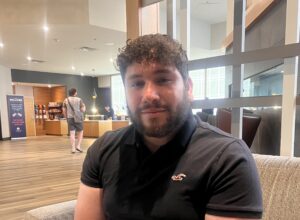
On a recent Sunday, I went to meet Mel Flores at the nonprofit Chinook Center – a self-described “progressive, mission-driven community space” located in a strip mall off Airport Road – to talk with him about his work for the local chapter of Migra Watch, a volunteer organization assisting persons affected by encounters with Immigration and Customs Enforcement (ICE).
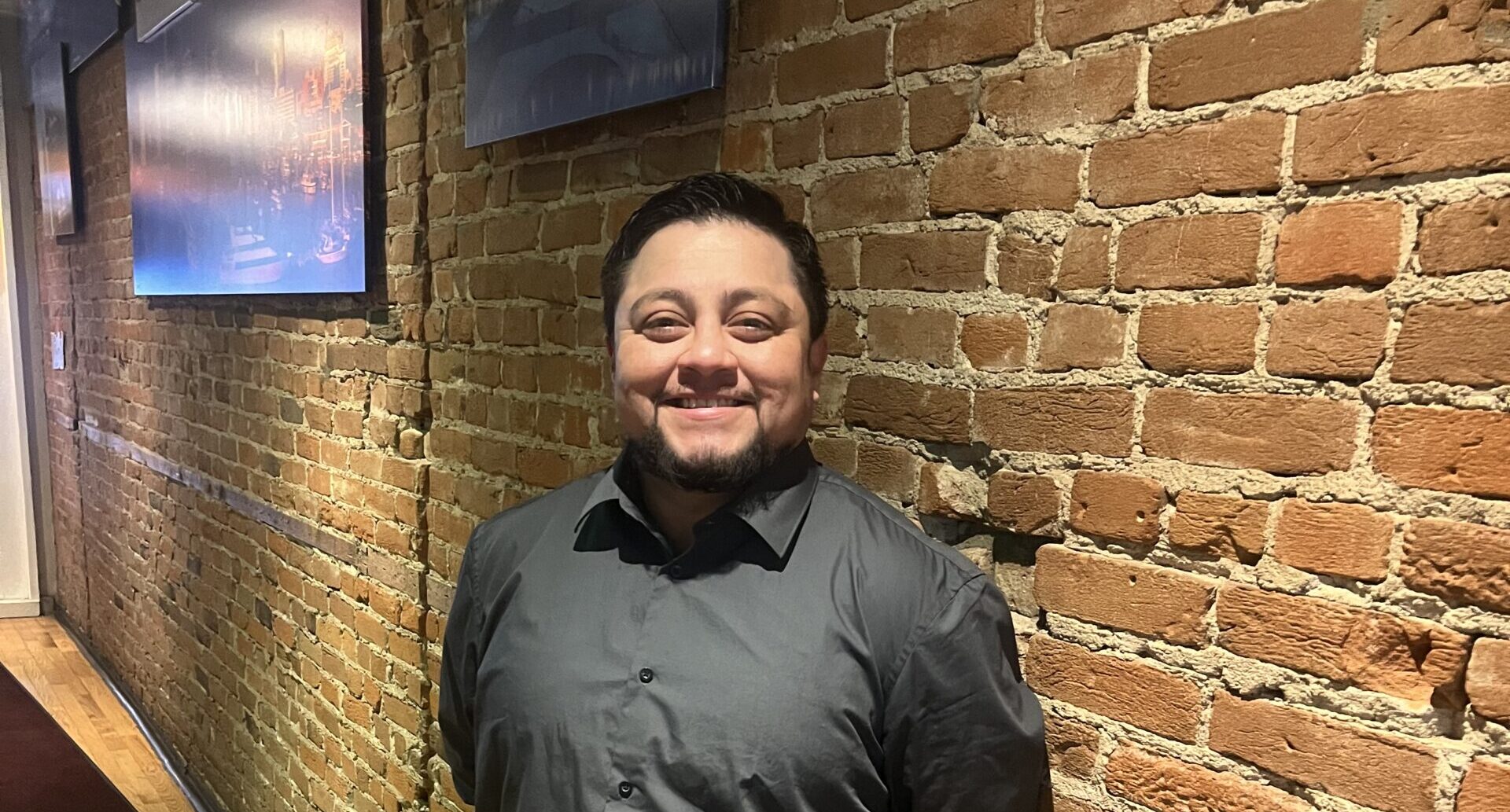
I first met Flores, an Army veteran in his mid-thirties, when he was facing a handful of misdemeanor charges for allegedly obstructing ICE while acting as a volunteer confirmer for the Colorado Rapid Response Network (CORRN). (Those charges were later dropped as part of a plea agreement in a separate case – a petty offense charge for walking in the road during a protest.)
CORRN is a network of immigrant advocacies and activist groups that operates a 24/7 hotline where callers may request rapid response support during an immigration raid or arrest. The hotline dispatcher alerts legal observers and confirmers via text who then go to the scene, record the event and inform people of their constitutional rights.
This work has taken on a new urgency with the ongoing massive deportation sweep that began with President Donald Trump’s second term.
So what happens after ICE and CORRN have come and gone? That’s where Migra Watch steps in, Flores said. ‘Migra’ is Spanish-language slang for immigration authorities.
“What Migra Watch does is fill in that gap after ICE leaves,” Flores said. “After ICE leaves, people are still afraid to leave their homes. People are still afraid to leave to go to the grocery store. People are still afraid to go to doctor’s appointments. I’ve taken people to their ICE appointments.”
Transportation, grocery delivery and patrols to watch for ICE are common services Migra Watch provides.
Flores said Migra Watch advertises itself through flyers and word-of-mouth. He said the local Migra Watch has about 100 members currently, many of whom are also CORRN confirmers.
Flores said he is seeing ICE detain people who “are doing the right thing.”
“They’re at appointments, they’re at work, they’re at school. They’re coming home from work,” he said.
“I would hope that … the more we come together, the more we show them that we are a community,” Flores said. “They can’t just come in here. I think it shows them how strong we are.”
Ride along
I rode along with a Migra Watch volunteer delivery driver I’ll call Mary due to her privacy and safety concerns. Picture a recently retired suburban white woman dressed to take the grandkids to the park, and you’ll more or less imagine her.
Mary was soft-spoken and kind, but nervous to talk to a reporter. She said a friend connected her to Migra Watch, and she volunteers at least a few times per month delivering groceries.
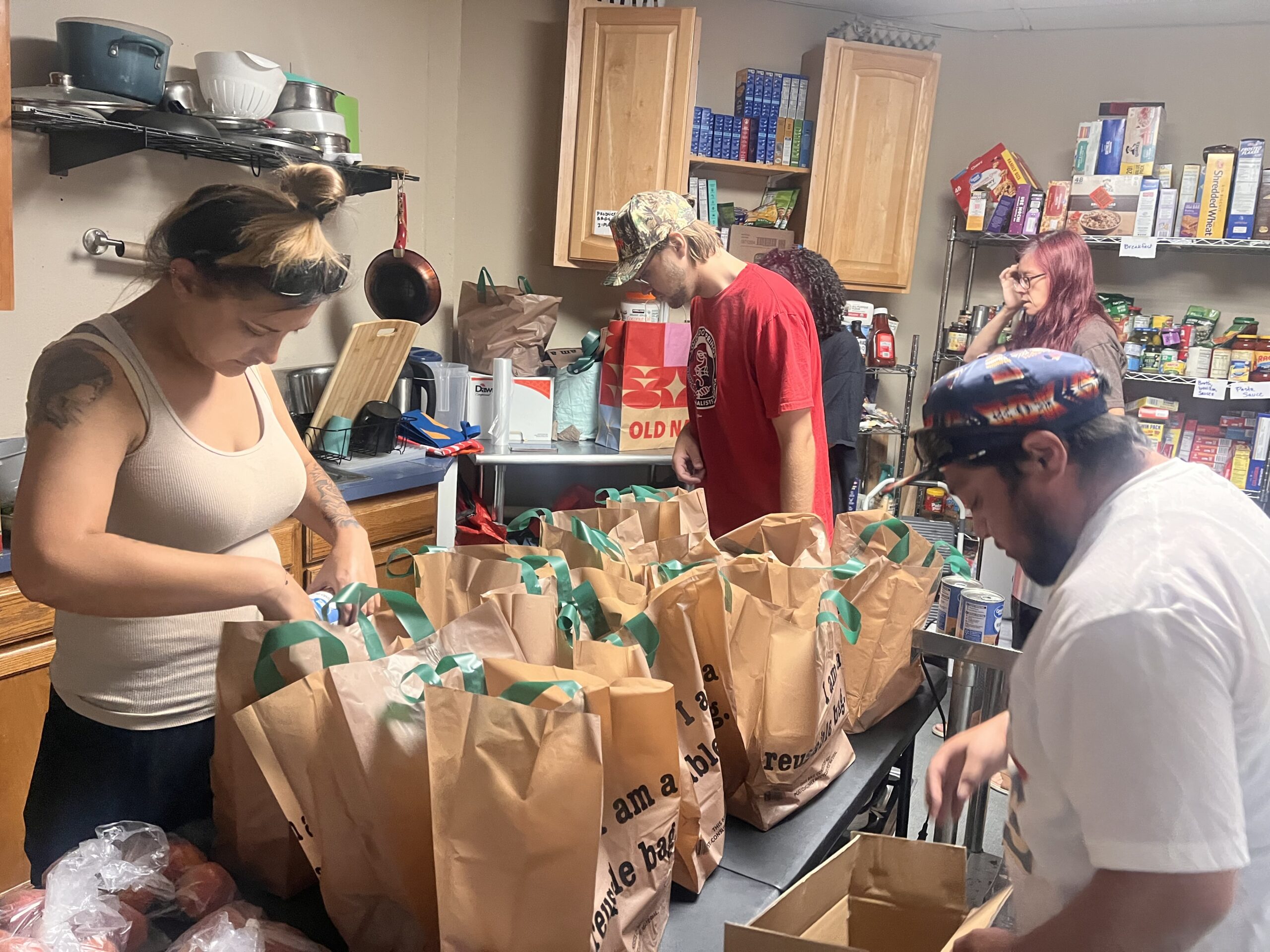
We drove about 10 minutes from the Chinook Center to an apartment complex. Mary carried several bags of groceries – a mix of fresh produce and nonperishables from the Chinook Center’s People’s Grocery program (more on that below) – up a few flights of stairs, and placed them in front of the door to one of the units.
She didn’t know the names or stories of the people on whose doorstep she left those bags of groceries – she never does. This time, as with every other, she placed the bags in front of the door, rang the doorbell, and walked away.
Mary said she does this work because she is appalled by what she reads in the news about the actions of ICE officers and the conditions in ICE detention centers.
“I like feeling that I’m helping with getting the groceries ready and then delivering to people that may be too scared to go out to get groceries themselves,” she said.
“It’s just a little way to give back.”
The Chinook Center
Meeting Flores and doing the Migra Watch ride along was my first time at the Chinook Center. I was mostly familiar with it through an article in The Intercept about how the FBI used an undercover Colorado Springs Police Department (CSPD) cop with pink hair to infiltrate the center and allegedly manufacture crimes during the Black Lives Matter protest era of the early 2020s. (The Chinook Center, along with the ACLU, is still involved in a court case from that time, alleging CSPD used unconstitutional warrants to comb through activists’ digital data in retaliation for their political speech and association.)
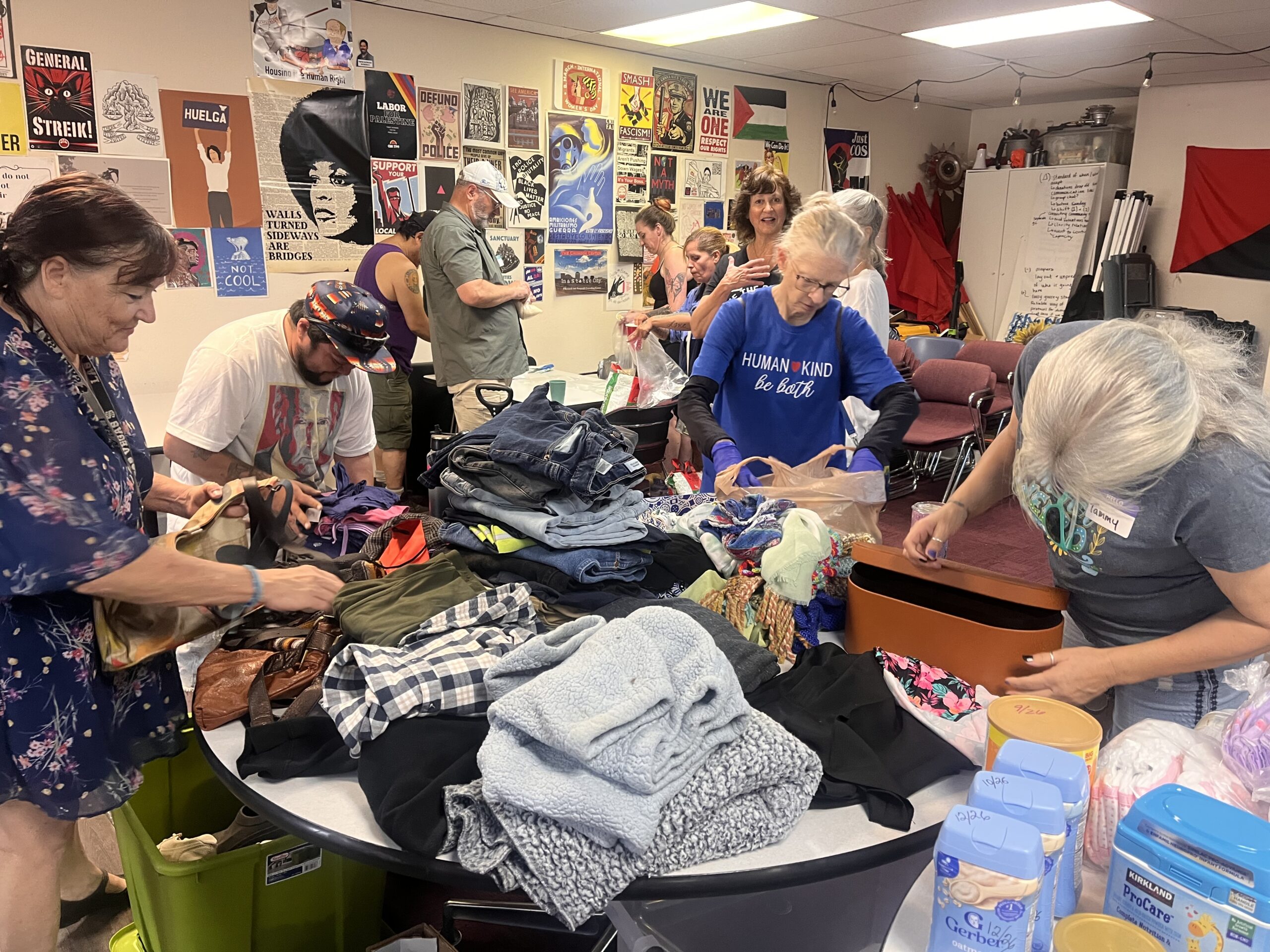
When I arrived, volunteers were busy setting up the People’s Grocery, a free-to-all, weekly food distribution and mutual aid program, putting bags of groceries, clothing, diapers and baby food, toys and other household items onto tables. It was similar to many food pantries I’ve seen at nonprofits and churches – except for the decor.
The interior of the Chinook Center is something of a time capsule of the BLM days, with posterboard signs bearing all-caps slogans like “WE WON’T BACK DOWN – BLACK LIVES MATTER” and “SUTHERS HATES POOR PEOPLE.” (John Suthers was mayor of Colorado Springs during the BLM era, and has been out of office now for three years.)
There are signs of the current times as well: a flyer in Spanish of how to report ICE activity to CORRN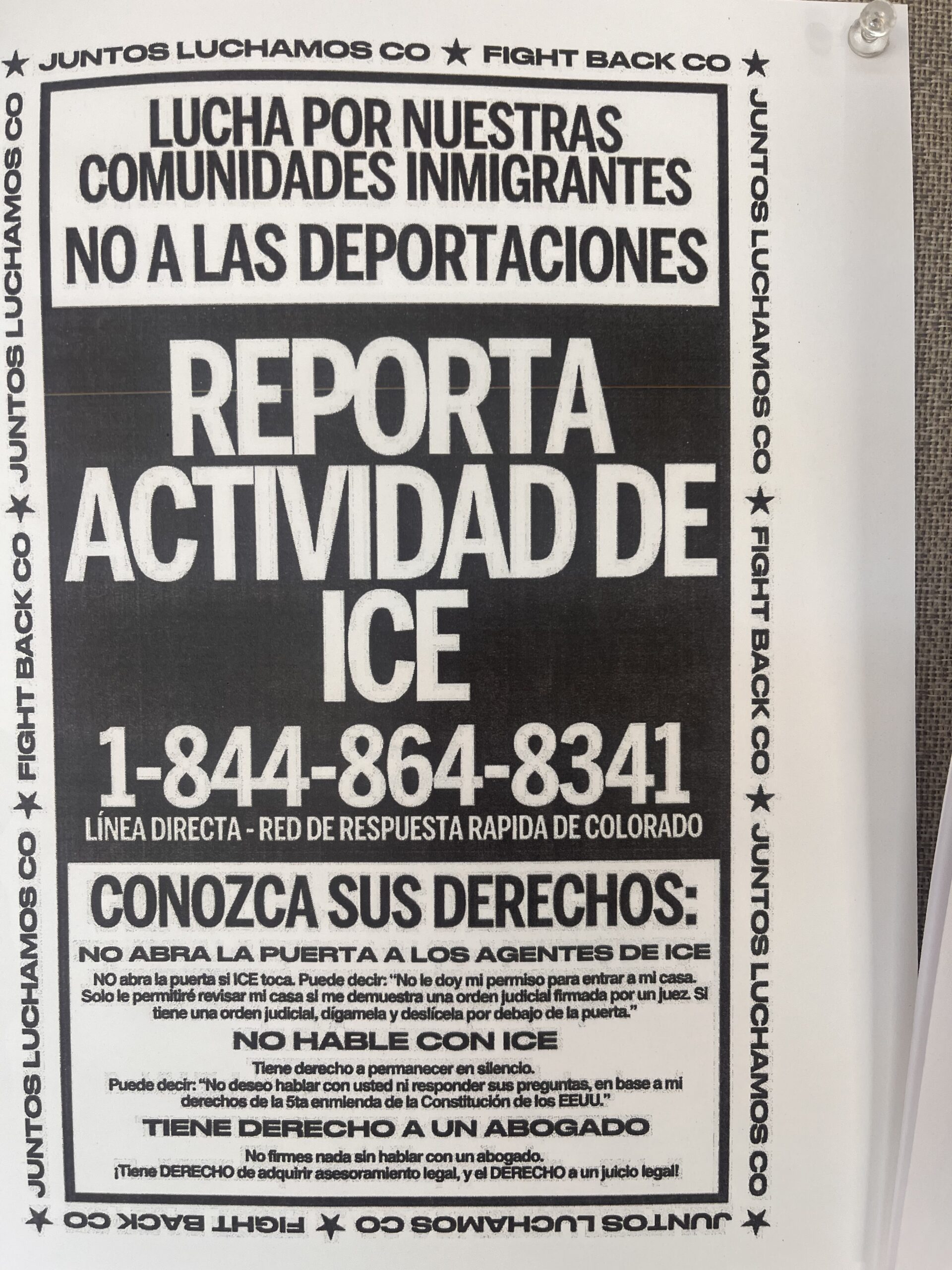 and another for Migra Watch. I saw one pro-Palestine sign and several anti-cop ones. One reads “Cops give pigs a bad name” and another likens police to the violent white supremacist group the KKK.
One of the co-founders of the Chinook Center, Sam Christiansen, was volunteering in the People’s Grocery. (The Chinook Center has no paid staff). I asked her if she ever worried that the very specific progressive stances plastered all over the walls might push some people away.
“It might,” Christiansen acknowledged.
She noted one of the first major events the Chinook Center organized around was the CSPD shooting of De’Von Bailey, a teenager who died after police shot him in the back in 2019, and mistrust of the police persists today. The leftist politics are another part of the package.
“We keep everything pretty political here because I think it’s honest,” Christiansen said. “Part of the reason we’re suing the City is that they described us as leftist radicals. So we’re, like, if the shoe fits. We’re leftists, that’s who we are … If you go to a church, they don’t pretend to not be religious.”
But, she said, the Chinook Center is a community social space and a number of grassroots groups operate there. This lends to “cross-fertilization,” such as the food distribution partnership that arose with the People’s Grocery and Migra Watch.
The Chinook Center is also hosting an educational series this summer called “Lectures in the Park.”
“We just want to see community coming together and working on what’s needed,” Christiansen said, adding that the best way to keep up with what’s happening at the Chinook Center is to follow it on Facebook and Instagram.