This article was first published by the Colorado Times Recorder.
Last week the Colorado Springs Planning Commission denied an appeal of the administrative decision to approve the Project Taurus data center. The project will be housed in a former Intel microchip manufacturing plant that was previously home to a Bitcoin mining operation near Garden of the Gods Road. The project has elicited widespread concern from residents and activists — who have raised concerns about noise, water consumption, and utility rates — during a series of community meetings. The Planning Department determined that a data center use is permitted under current zoning and the city’s Urban Development Code, which resulted in an administrative approval.
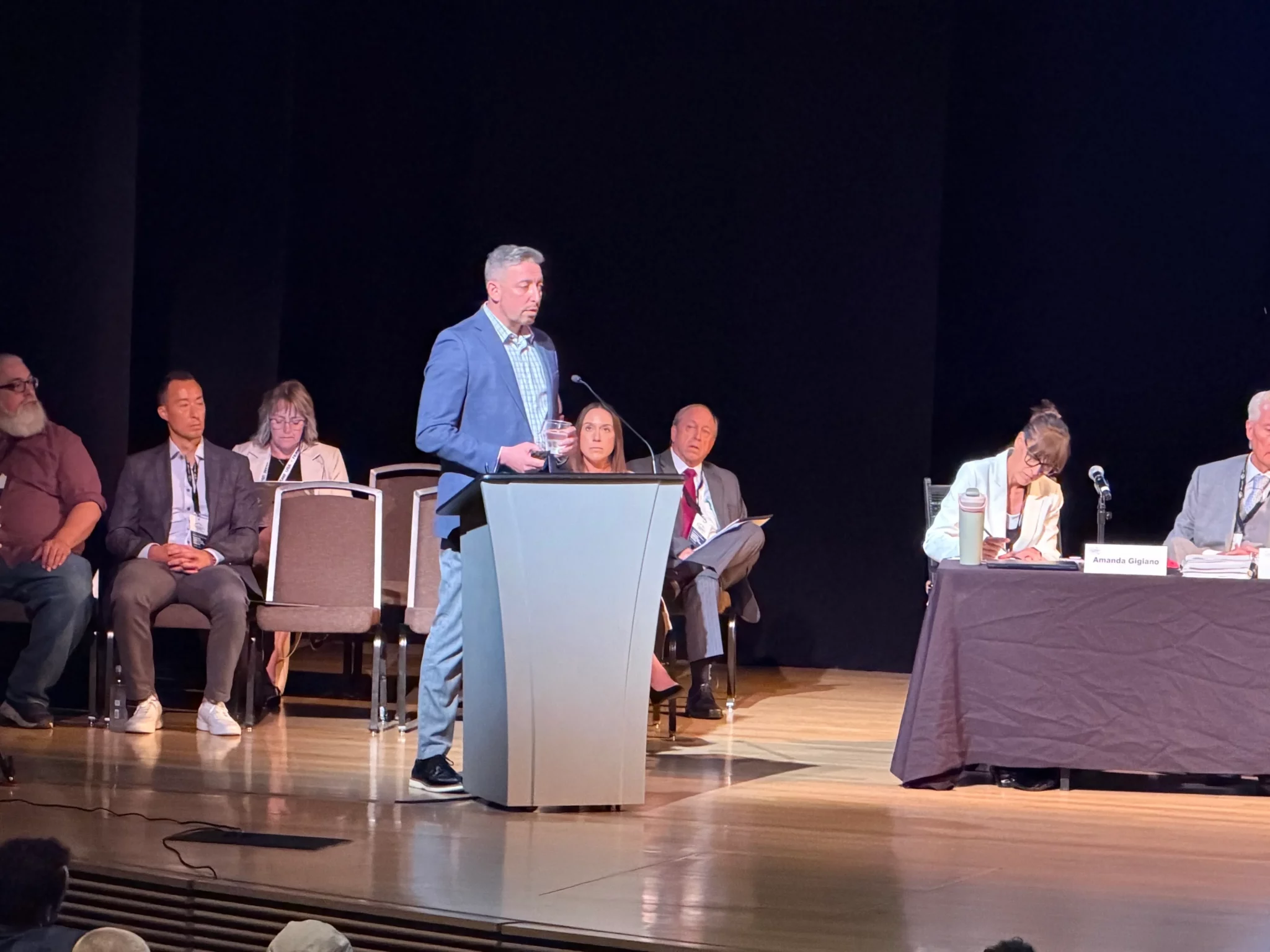
The Planning Commission voted 6-2 to deny the appeal after hours of testimony from the appellants, the applicant, and members of the community. Following the hearing, the data center developer and an appellant appeared on talk radio to discuss the hearing.
“I don’t want to be too derisive, but we also heard from Dr. Seuss, we heard about the Lorax, we heard some Greek mythology,” said Jason Green, Raeden co-founder and COO, during a July 24 appearance on the Jeff and Bill Show. “There were a number of interesting other interpretations that I’m not quite sure would have to do with data centers, but you get your time. You get your two minutes and speak on it and do what you do. I think fundamentally what we heard is a consistent echo of the national drumbeat of concerns about data centers, and what the impact would be. I think for many of the folks that were there — and there were some extremely well-presented and thoughtful assertions against why this isn’t a valid project in their perception —a lot of it was repetition.”
Conservatives have argued that the push to oppose data centers is part of efforts from foreign governments. The Colorado Springs Gazette recently published an editorial titled “Beware of the disingenuous war on Colorado’s data denters,” alleging that protests and moratoriums against data centers are the result of foreign influence. Yesterday, Fox News published an editorial titled “The war on data centers jeopardizes our economy and national security” that blames China for anti-data center sentiment.
Deirdre Aden-Smith, an activist with Integrity Matters, one of the appellants, discussed the group’s concerns during a July 24 appearance on the Richard Randall Show. “You shouldn’t put this next to a residential [area] because people are in their backyards, they have children they’re raising, and something that’s only 358 feet from someone’s backyard is an invasive use. It wasn’t zoned for that, so I think the big question goes back and that’s what you’re seeing across the country is these have to be zoned appropriately with all the guardrails in place to make sure that they’re not negatively affecting any community, whether it’s their resources with utilities or if it’s their home.”
While the proposed site for the Project Taurus data center is zoned appropriately, its property abuts the Chelsea Glen neighborhood, which is zoned residential. Since their initial proposal and community meeting, Raeden has modified the plan for Project Taurus, including adding a 30-foot wall and moving the backup generators to reduce noise going into Chelsea Glen.
“I also feel like there was a tremendous lack of — even maybe awareness of — how much time is spent with the community,” said Green. “Raeden put in a lot of time to make sure the community concerns were heard and that, frankly, through the four development plan reconfigurations, if you will, that the community drove a lot of those reconfigurations and we heard it and we implemented it. I don’t expect everybody to pat us on the back and say that’s great, but I don’t think that there was a deep understanding … there was a consistent level of talking points that were put into place and were just hammered upon over and over again whether there was foundation or not.”
Green claimed his efforts at community engagement for this project were lauded by U.S. Senator John Hickenlooper (D-CO). “He was fully in support,” said Green. “He said, ‘Look, I hear that you’re doing the right thing.’ He said, ‘I heard that you guys have listened to the community.’ Like he actually had been briefed on this. And so what it said to me is, how do we foster more opportunity and development in the state? Thematically, one of the most important things I think that the panel really put forth to us yesterday, the commission put forth to us, was can you actually walk the walk and then can you talk the talk in terms of how are you going to develop the site? And we are committed to transparency. We’re committed to doing things the right way.”
Aden-Smith raised concerns about Raeden’s legal representation during last week’s Planning Commission meeting. “There was a very obvious discrepancy or the legal firm that was representing the developer, Raeden, also works for the city,” she said. “That isn’t typically — in most business relationships would be a conflict of interest. You can’t represent two parties, you can’t be doing PR for the City on the benefits for the Chamber or the economy and then also be representing the developer. We will certainly be revisiting that because that was very clear that you can’t wear two hats in this kind of situation.”
Joining Green and Raeden onstage during the Planning Commission hearing was former Colorado Springs Mayor John Suthers, who now works for the firm Brownstein Hyatt Farber Schreck. In 2025, the city of Colorado Springs spent $200,000 with the firm Brownstein Hyatt Farber Schreck for lobbying, according to Open Secrets.
Green also emphasized the economic benefit to Colorado Springs. “We’re going to need between 450 and 700 construction jobs over about a 9-month period,” he said. “On the capital front, the taxes are also significant. I want to underscore this by saying that we’re receiving zero incentives. None. There are no state-level incentives. There are no local incentives. We have not applied for incentives. We’re not going to apply for any incentives. We’re not getting anything in return. But in our first year alone, we’ll be generating roughly $115 million in sales tax revenue. Just repeat that. $115 million in sales tax revenue. The entire budget for the city of Colorado Springs annually is $400 million. So we feel like we’re bringing a significant amount of revenue to the city and sales tax revenue alone. The property tax is now going to increase by a minimum of double if not triple in year one.”
The appellants have until Aug. 3 to file an appeal, which would be heard by Colorado Springs City Council. Green said he hopes Project Taurus will be in operation by early 2027.