The data points toward a clear path forward, and this is the political moment to pursue it.” John Jarrell, chair of the El Paso County Democratic Party
Residents of the more diverse and working class part of Colorado Springs known as the Southside vote at significantly lower rates than the city as a whole. Democratic leaders believe that with the right voter outreach and compelling candidates, that could change – and could end Republicans’ total domination of the Board of County Commissioners, help flip Congressional District 5, and change representation on the nine-member city council.
This year, two Democratic candidates hope to flip seats which have thus far been held only by Republicans.
Former city councilor Yolanda Avila is in the running for County Commission District 5, which includes the Southside, against Republican incumbent Lauren Nelson, who was appointed to the position last year and was previously on the board of School District 11.
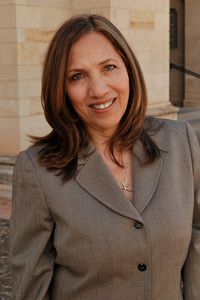
And, army veteran Jessica Killin aims to unseat Republican incumbent Rep. Jeff Crank in Congressional District 5 which spans most of El Paso County. National Democrats see the district as flippable, and have pledged investment and support to her campaign.
Recent primary results encourage some Democratic optimism – perhaps especially in the County Commission District 5 race, wherein about 12,463 voters cast ballots in the Democratic primary compared to 9,839 in the Republican primary, an early sign there is more enthusiasm and engagement for the Democratic candidate in that race.
In Congressional District 5, about 74,375 votes were cast in the contested Democratic primary while 76,547 were cast in the uncontested Republican primary.
El Paso County has many more registered Republicans than Democrats – 142,130 to 82,524. The turnout numbers in these two primary races indicate unaffiliated voters – who make up the largest portion of county voters, numbering 269,960, may be leaning toward the Democratic candidates. [Numbers are from the El Paso County Clerk and Recorder’s website as of July 19, 2026).
Colorado Springs is also gearing up for springtime elections that will decide the mayor and three at-large council seats. (An ongoing lawsuit aims to change the timing of city elections asserting this disenfranchises minority voters – though city officials, including the city’s first black mayor, dispute this – but it will not affect the next spring election cycle.)
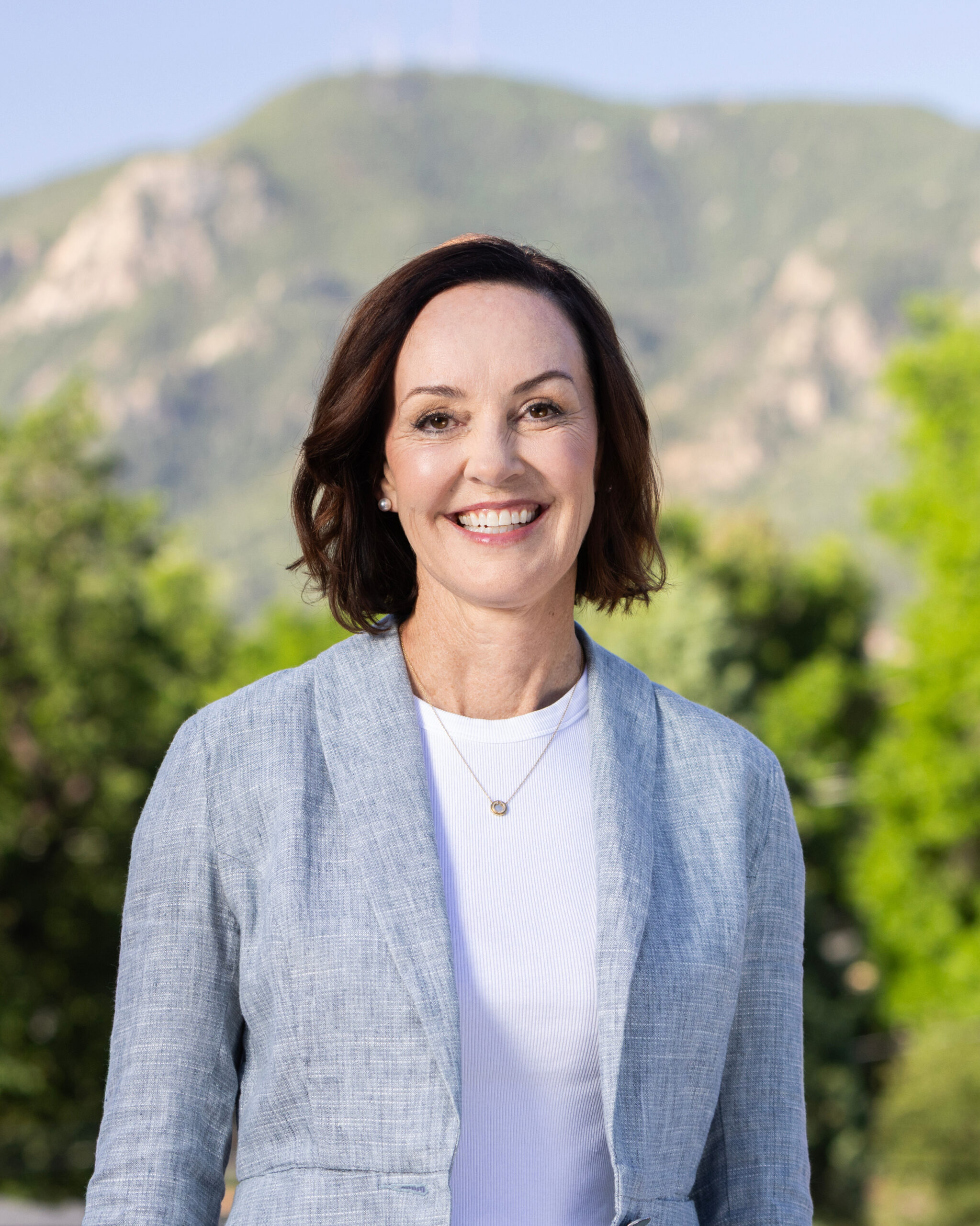
Kimberly Gold represents the Southside as the Colorado Springs City Councilor for District 4. While the city council is nonpartisan, Gold has endorsed Democratic candidates, including Killin.
“Currently the Southside has some of the lowest voter turnout in the city for all elections,” Gold told the Pikes Peak Bulletin. “Voting is the pathway to changing outcomes in our daily lives and for the future. I truly believe that when the Southside has above-average voter turnout, we could influence every single election and every single ballot measure.”
Steph Vigil is the Democratic candidate for House District 16 (which does not include the Southside), and outgoing executive director of Citizens Project, a nonprofit dedicated to civic engagement (and one of the organizations behind the lawsuit to change spring elections).
A 2023 Citizens Project survey found that while 95% of respondents believed local elections matter, and 85% believed their vote matters, it wasn’t reflected in voter turnout – and the primary reason was feeling as if no candidate represented their interests. Other barriers identified in the survey included being unclear when to vote, feeling uncomfortable at the ballot box, unclear ballot measure language, mistrust of mail-in ballots, and ballots not written in a potential voter’s primary language.
Read the full 2023 Citizens Project Low Voter Turnout Survey
While the survey indicates underinvestment contributes to low voter turnout, Vigil noted the opposite is also true – low voter turnout likely worsens underinvestment in the Southside.
“There’s no hospital … the average temperature is six degrees hotter than the rest of the city; some of the most deadly intersections for pedestrians are [there]; there are pockets of food deserts,” she said. “In my view, boosting [Southside] voter participation has to be a high priority for any civic leader in our city.”
At least one non-Democratic civic leader agrees with Vigil. El Paso County Clerk and Recorder Steve Schleiker, a staunch Republican, said at a recent forum hosted by the Bulletin that increasing Southside voter turnout should be a priority – not for a Democratic win, but for the health of democracy and respect for the sacrifices that made voting possible.
“Guess where many of our veterans and active-duty military live,” said Schleiker, referring to the Southside, where he grew up. “These are individuals that raised their right hand and swore an oath to support and defend … this right to vote. So we all need to collectively get out there [and] work extremely hard.”
Untapped potential
The Southside is distinct from other southern parts of the city that have smaller minority populations. Some people use Colorado Springs City Council District 4 or the ZIP codes 80916 and 80910 to define Southside boundaries.
While there is no strict definition of “the Southside,” during the 2023 El Paso County Commissioner redistricting effort “Southeast Colorado Springs” was defined as “the 30 contiguous precincts inside the city of Colorado Springs with a non-white population of 45% or greater,” recalled John Jarrell, chair of the El Paso County Democratic Party.
Jarrell said he finds it useful to look at State House District 17 (HD17) in analyzing Southside voter turnout in part because it encompasses most of those precincts. Senate District 11 and County Commissioner District 5 now contain all of those precincts.
HD17 is “the most Democratic-leaning district in El Paso County among the partisan districts — House, Senate, and County Commission — and arguably the most Democratic district south of the Denver metro,” Jarrell said. “At the same time, it is by far our weakest district in turnout.”
He cited turnout numbers from the 2024 State House races. These races occurred in a presidential election which typically boosts turnout.
2024 State House races, rounded. EPCDP.
HD | Votes Cast | Registered Voters | Turnout
14 | 56,700 | 87,800 | 64.60%
15 | 45,700 | 80,200 | 57.04%
16 | 41,300 | 67,200 | 61.46%
17 | 25,900 | 57,500 | 45.01%
18 | 46,300 | 74,100 | 62.46%
20 | 55,500 | 82,400 | 67.42%
21 | 30,300 | 61,200 | 49.46%
22 | 45,700 | 71,500 | 63.92%
“Two districts jump out immediately: HD17 and HD21, both of which saw fewer than half of their registered voters participate in the 2024 House election — a presidential year,” Jarrell said. “That tells us that the urban area south of Platte and east of Circle, extending through Fountain, remains substantially less politically engaged than the rest of the county.
He also pointed out the difference in registration numbers, even though each district was drawn to contain roughly the same population based on the 2020 Census. Some of that, he said, can be chalked up to rapid population growth in some districts and a large military population in HD21 – where many residents count toward population totals for redistricting purposes but remain registered to vote in other states.
“But HD17 is different,” he said. “It has only 57,500 registered voters compared to adjacent HD18’s 74,100, despite both districts experiencing relatively limited growth since the census. While HD17 does include some military population, it does not approach the concentration found in HD21, yet it still trails even further behind in registration.”
Jarrell said the Democratic party has identified approximate numbers of “likely Democratic voters” grouped by House District who did not vote at all in 2024.
“The single largest untapped bloc of likely Democratic voters in the county sits in HD17, with HD21 close behind,” he said.
He added, “Not only do we have more than 5,000 likely Democratic voters [in HD17] who skipped the 2024 election, but the [Southside] also contains the county’s greatest potential pool of new Democratic voters entering the electorate for the first time.”
Likely Dem voters identified by the Dem party
HD14 — 3,800
HD15 — 4,300
HD16 — 3,700
HD17 — 5,100
HD18 — 4,200
HD20 — 2,100
HD21 — 4,500
HD22 — 3,300
Jarrel posed the next logical question.
“So what do we do about it?”
Barriers and solutions
“If we want more civic engagement from people, particularly from our working class, we have to build systems that allow for everyone to be civically engaged,” Gold said.
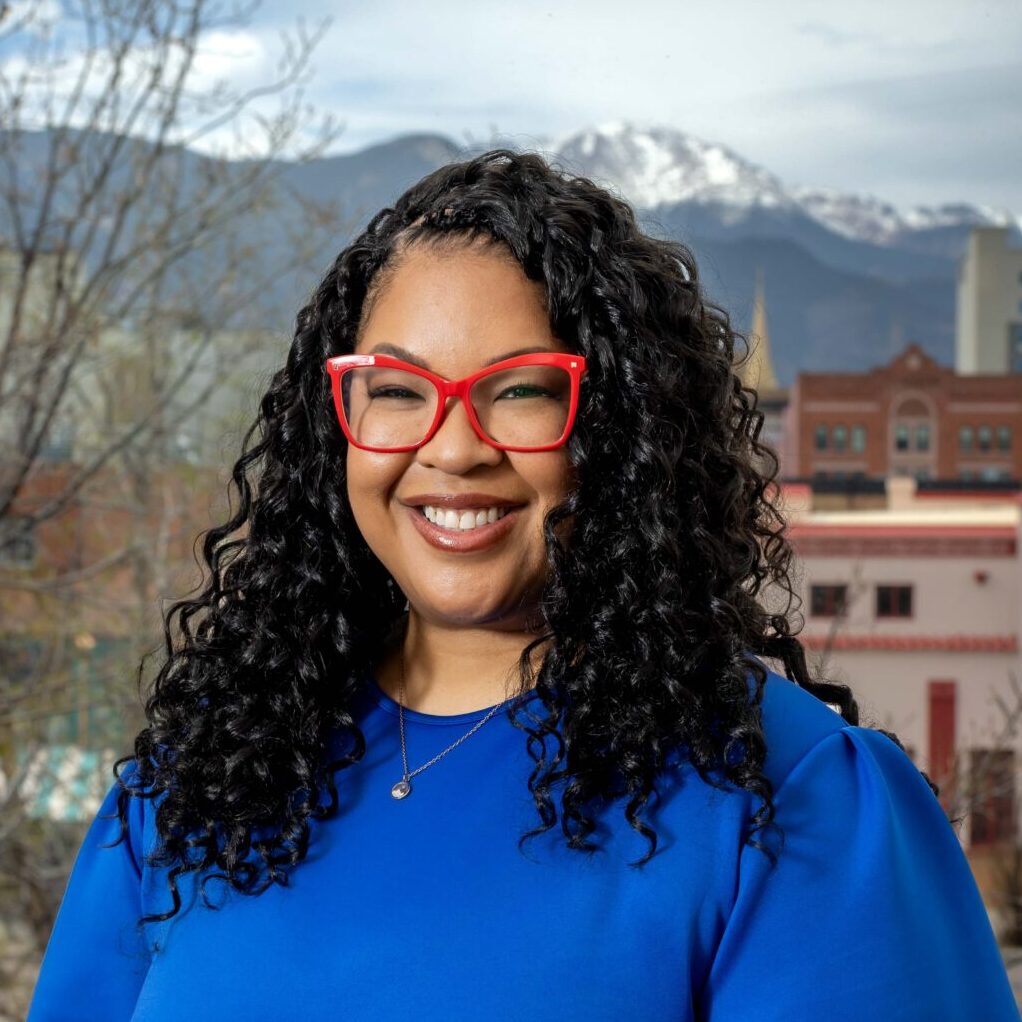
“If this were easy, it would already have been done,” Jarrell acknowledged. “What it requires is old-school, large-scale neighborhood organizing – the kind of sustained canvassing operation longtime activist June Waller has pushed for repeatedly over the years. That is exactly what we intend to build, and we plan to name these efforts ‘Waller Walks’ in her honor.”
Jarrell pointed at a current lack of outreach to a whole demographic.
“The biggest and most solvable issue is our failure to adequately engage the Hispanic community in Southeast Colorado Springs,” he said. “When we describe [the Southside] as ‘the 30 precincts with a non-white population above 45%,’ that understates how heavily Hispanic many of these neighborhoods actually are.”
He continued, “We have to engage Spanish-speaking communities directly. Translated literature and websites matter, but they are not enough. We need Spanish-speaking callers, canvassers, and organizers capable of building one-on-one relationships with what is arguably the largest untapped voting bloc in the region.
Jarrell believes the outcome could be transformative.
“Success here would not just make CD5 competitive. It would fundamentally reshape local politics,” he said. “Senate District 11 and County Commissioner District 5 would likely cease to function as swing districts. Democratic citywide campaigns would become far more viable. HD17 itself would become a cornerstone district for the Colorado Democratic Party.
“And if turnout among Hispanic voters in HD17 increases substantially, that impact will inevitably spill over into neighboring HDs 15, 16, and 21, each of which contains growing Hispanic populations of its own.
“Is this ambitious? Absolutely. But the data points toward a clear path forward, and this is the political moment to pursue it.”
Editor’s note: Originally, this article focused on whether increased voter turnout in the Southside could sway the Congressional District 5 race. Data analyst and former El Paso County Democratic Party Vice-Chair Rob Rogers provided an in-depth analysis to answer that question, found here. If you, like me, appreciate a well-done data set, you’ll want to check this out. If you want the TLDR; Increasing voter turnout in the Southside will not alone flip CD-5, but it will help.