In the late 1940s, a teenaged Barbara Grier scandalized her Colorado Springs high school counselor by saying she was a lesbian – and she refused to keep it a secret.
In 1969, Donaciano Martinez co-founded the Gay Liberation Front of Colorado Springs. The Front held support groups in members’ homes to talk about issues around being openly gay, like potential job loss – but never at Martinez’s, because his partner was a closeted military man who feared for his own career.
On Dec. 6, 1986, The Colorado Springs Gazette Telegraph ran an article with the headline “‘Halfway house to death’ to shelter victims of AIDS” about Lambda House, set to open the following month. (The Greek letter, lambda, has long been a pro-queer rights symbol). The article notes 12 people were already waiting to move in.
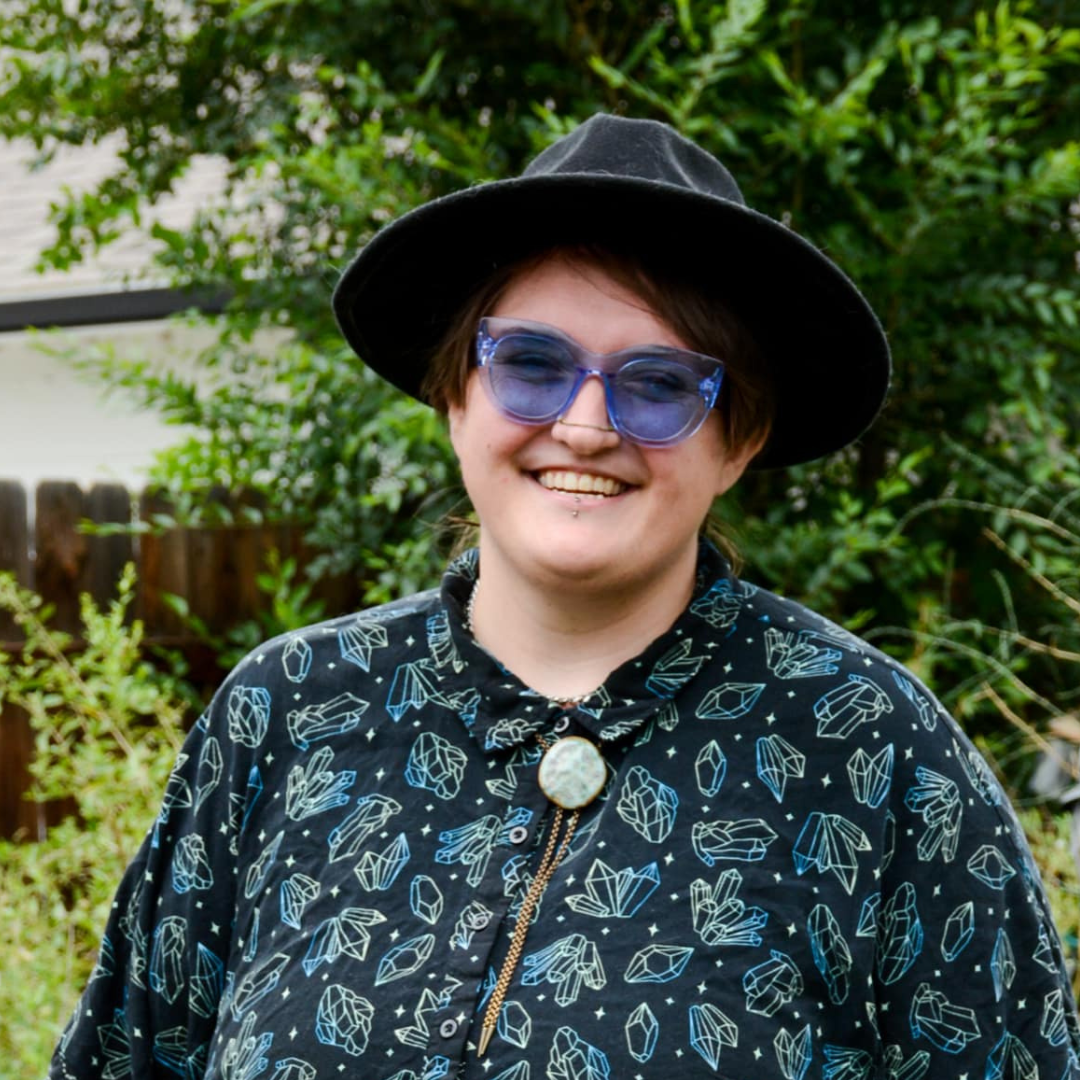
Preserving these local history stories and others is why Nico Wilkinson founded the The Queer History Archive of Colorado Springs, a research project he says will “document the corners of Colorado Springs LGBTQIA2+ history and culture across time, place, and connections.”
“My hope is that, through this research, the impacts and contributions of different people, organizations, events, and places are not lost to time,” Wilkinson said. “It also serves as a reminder that queer people have always been here.”
Wilkinson is a queer and trans poet, artist, and organizer of the Keep Colorado Springs Queer open mic. He started work on the archive in November of last year after wrapping up a gallery exhibition, “Spreading the Word(s): The Poetry of Activism” at the UCCS Heller Center, and selling the last copies of his poetry book, “The Weeds Grow Anyway.”
“I was in that haze I often find myself in when a project ends in which I don’t know what to do with myself,” Wilkinson said.
Then, through his work as Outreach Coordinator at Inside Out Youth Services, he met with Monycka Snowbird of Sweetgrass Advocacy to discuss ways their organizations could support one another.
“She was telling me about her work of uncovering stories of missing and murdered Indigenous people, and recovering the remains of Indigenous people whose bodies had been stolen and displayed in various locations around Colorado Springs,” Wilkinson said. “She also told me about organizations that were around in the 90s and early 00s that were doing LGBTQIA2+ advocacy, such as Ground Zero.”
He continued, “It occurred to me, as someone who had been living and organizing in Colorado Springs for over a decade at that point, that there was so much I did not know. So many stories that were being swallowed, both by the passive, yet unyielding, force of time, and the active forces of fascism that seek to erase certain people and stories. I was inspired by Monycka [Snowbird]’s work of unearthing the stories of her community’s elders, amazed that someone in the present, through intensive research and perseverance, could recover stories and knowledge from the past that might otherwise be lost to time.
“I started to wonder, who was doing the work here in Colorado Springs before I and my other queer contemporaries arrived here?”
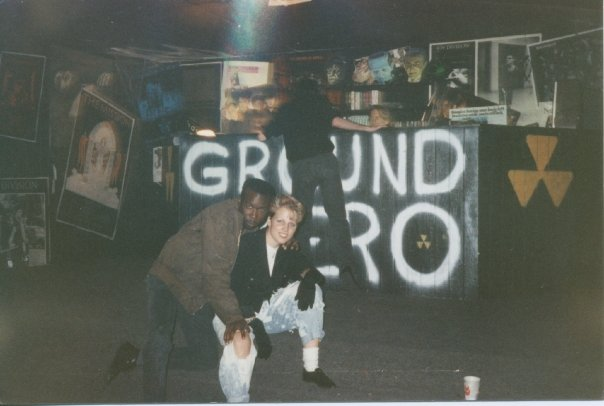
So Wilkinson set to work compiling those stories, often using articles in archived newspapers available through the Pikes Peak Library District and episodes of the Colorado Springs LGBTQ+ Oral History Project – a public archive of oral histories by LGBTQ+ residents of Colorado Springs, as well as the Denver-based Center on Colfax’s Colorado LGBTQ History Project.
Rushaan Kumar, an associate professor of feminist and gender studies at Colorado College, said he is a founder of the Colorado Springs LGBTQ+ Oral History Project along with Dr. Tre Wentling at Women’s and Ethnic Studies (WEST) at UCCS, their students, and LGBTQ+ identifying community members. The focus of the oral history project has been on local queer life and community organizing over the last 40 years.
“We have collected around 60 stories so far that provide a rich history of collective action against Amendment 2, queer-affirming churches and queer leadership in faith-based spaces, HIV/AIDS prevention and advocacy work, queer-run businesses and community initiatives, art, music, and poetry collectives in the city, and so much more,” Kumar said, noting Wilkinson is a graduate of Colorado College and his life story is archived in the oral history.
“When Nico [Wilkinson] reached out to me about possibly collaborating on their COS Queer History Archive … I was thrilled because I saw a way for the information we have gathered through the oral histories to be made even more accessible and searchable,” Kumar said.
This spring, Kumar said, students in his LGBTQ Social Movements in the U.S. class contributed original research that expanded both the oral history and archive projects.
“I am certain that Nico [Wilkinson], Tre [Wentling], and I will continue to find ways to support and grow our projects in conversation and collaboration with one another and our students, and in the process continue to claim Colorado Springs as a queer and trans place now and historically,” Kumar said.
Episodes of the Colorado Springs LGBTQ+ Oral History Project are available on Spotify, and episodes with transcripts are housed in the Charles L. Tutt Library’s digital archives.
Part of larger effort
David Duffield is the history program coordinator for the Colorado LGBTQ History Project at The Center on Colfax in Denver. He is also on the Colorado Springs Queer History Archive’s Lambda History Committee, a team of researchers working on the archive.
Duffield said The Colorado Springs Queer History Archive is part of a much larger effort.
“Across Colorado, the United States, and the world, people are gathering stories, preserving archives, and making LGBTQ history visible. Storytelling is one way communities respond to erasure, fear, and misunderstanding,” he said, noting that in Denver, similar archival work and institutions such as History Colorado and Denver Public Library have had “a significant impact on the amount and diversity of LGBTQ historical materials available in Colorado.”
“We fight fear and ignorance with courage and knowledge. By sharing our stories, archiving them, and bringing them into public view, we build empathy. We also remind people that history does not simply repeat itself; human behavior does. That is why this work matters,” Duffield said.
He added, “And there is joy in it, too. There is joy in telling the story, joy in learning it, and joy in ensuring that the story is passed on. Ultimately, this is the joy of telling the story of us.”
Wilkinson said he wants people to see themselves in these stories – and to consider contributing their own stories.
“I want to ask the person reading this, especially if they’re part of the LGBTQ+ community, to see themselves as a part of history, as someone with a story worth preserving,” Wilkinson said. “It might feel egotistical to do so – I feel egotistical when I take steps to archive and preserve my own work – but then I think about how many people of the past I desperately wish I could find more information about, but whose voices elude me. They might not have known that a day would come in which a researcher would be seeking out their stories, inspired by what little was left behind.
“One day, the future may come knocking. I am asking you to take steps now so that your story may answer. With all the queers who have yet to arrive in mind, I implore you to contribute to the archive.”
To read The Queer History Archive of Colorado Springs, contribute your own story, or express interest in joining the Lambda History Committee, go to https://cospringshistory.lgbt/.