
For years, the people of Colorado Springs have been told that police oversight is complicated, that reform takes time, and that the right process must be followed before meaningful change can happen.
But for many of us who were there when the local movement for law enforcement accountability began, the story of how we arrived here has never been complicated, and it has never been forgotten.
Yet the structure that ultimately emerged – the Law Enforcement Transparency and Advisory Commission (LETAC) – was built without the authority necessary to investigate misconduct or enforce accountability.
This was not simply a policy failure. It reflects a deeper pattern in how governments respond when communities demand change in an organized manner. Instead of refusing outright, institutions often redirect movements into lengthy processes that gradually drain urgency from the issue.
To understand how we arrived here, it is important to remember where this movement began.
In August of 2019, Colorado Springs police officers shot and killed De’Von Bailey, a 19-year-old young man whose death shook this community.
For many residents, De’Von’s death raised painful questions that had existed long before that moment.
Questions about use of force. Questions about how those incidents are investigated. Questions about whether the public can truly trust a system where police departments and prosecutors often clear officers after fatal encounters.
Those questions did not disappear after the investigation concluded. They grew. And eventually they spilled into the streets.
What happened in Colorado Springs in 2020 is often remembered simply as protests, but that description leaves out the most important part. The movement was not chaos. It was organized civic action.
Many of us were there every day, organizing, talking with neighbors, planning marches, and trying to turn public frustration into real solutions. And all of it unfolded during one of the most disruptive moments in modern history. As COVID-19 spread across the country and public life slowed to a halt, the city slowed with it. Meetings were delayed, processes stretched, and momentum that had been building in the streets suddenly found itself moving through a system that was grinding more slowly.
And the work did not happen only in the streets.
Local universities built research teams that began studying our police department and examining oversight models used in other cities. Leaders from neighborhood organizations and community centers helped bring residents together to talk through what meaningful oversight could actually look like.
At the same time, the movement helped give birth to something even more permanent. What had once been a smaller nonprofit presence grew into a community juggernaut when the Chinook Center emerged as a physical hub for organizing, education, and collaboration. A group of local organizers – myself among them – helped establish the physical space so that activists, researchers, organizers, and everyday residents would have a place to gather, strategize, and build the civic infrastructure needed to push for lasting change in this city.
This was not a mob demanding change without a plan. It was a community building one.
As the protests continued and the calls for accountability grew louder, the City of Colorado Springs commissioned an independent audit of the police department itself.
The consulting firm Transparency Matters conducted a detailed analysis of Colorado Springs Police Department use-of-force incidents, and the findings were significant.
The report found that Black arrestees were about 1.3 times more likely than white arrestees to experience force during an arrest, while Hispanic arrestees were more likely to experience force.
Researchers also reviewed incidents where officers pointed firearms at civilians. Out of 140 cases examined, 13% were determined to be inappropriate or lacked sufficient justification.
The report recommended improvements including stronger oversight of force incidents, better transparency, and expanded training and de-escalation practices.
In other words, the City itself paid for an independent audit that examined the same concerns residents had been raising in the streets.
The community protests were not baseless accusations. They were early warnings about problems that were later documented through research.
With protests underway, research accumulating, and public pressure mounting, City leadership eventually moved to create what would become the Law Enforcement Transparency and Advisory Commission, commonly known as LETAC.
But the process that produced LETAC raised serious concerns from the very beginning.
While protests were still happening and the city was under national scrutiny, officials quietly assembled a small group of individuals to draft the oversight plan.
Many of the community networks that had been organizing the protests – the same people doing the research and building proposals – were largely cut out of those conversations.
By the time the plan reached the public, the structure had already been decided: LETAC would exist. But it would have no investigative authority.
From the beginning, many of us warned what would happen. LETAC had no teeth.
The commission could review information. It could discuss concerns. It could make recommendations.
But it could not independently investigate misconduct. It could not subpoena documents or testimony. It could not enforce discipline.
In other words, it could talk about accountability without having the power to create it.
Over time, the existence of LETAC gave city officials something valuable. Whenever residents raised concerns about policing, they could point to the commission and say the issue was already being addressed.
Meanwhile, the protests faded, meetings replaced marches, and the urgency that once filled the streets slowly dissipated.
This is how time becomes a political weapon. Movements demand change immediately. Processes stretch those demands across years. This is done intentionally.
Many of the people who helped organize the protests applied to serve on LETAC because we believed the City might finally be ready to listen.
Not one of the protest organizers who helped mobilize the movement was selected.
Yet individuals with connections to law enforcement — including a retired officer and a family members of a former officer — were appointed to seats. The other people closest to the problem were left outside the room.
Despite those limitations, several people who served on LETAC still tried sincerely to make the commission meaningful. One of those people was Deb Walker, a longtime advocate for civil rights and community equity in Colorado Springs.
Deb and others invested years of their lives trying to make the commission serve the public interest. They deserve recognition for that effort. And frankly, they deserve an apology from City leadership for being forced into investing all of that time inside a structure that was never given the authority necessary to succeed. They could have been building something that actually had a chance from the beginning. They deserved more respect from the City.
Today, the responsibility for finishing this work rests with Mayor Yemi Mobolade. The strong mayor system we have enables him to enact a police oversight system. Former Mayor John Suthers, in office when the local movement for police oversight began, stonewalled us. But now Yemi can take all the info and make it happen.
The protests happened. The organizing happened. The City’s own independent analysis and report happened.
Mayor Mobolade did not inherit a mystery that still needs to be solved. He inherited a record built by protesters, researchers, community organizers, and an independent report for which the City paid.
Just last month the mayor traveled across Colorado Springs during Black History Month celebrations, speaking publicly about his respect for and commitment to the Black community in this city.
Those words sounded good, and were welcomed. But communities are not strengthened by speeches and ceremonies. They are strengthened by action.
Cities across the United States already operate civilian oversight systems with real authority. New York has the Civilian Complaint Review Board. Chicago has the Civilian Office of Police Accountability. Oakland has a civilian police commission with disciplinary authority. Even Denver operates an independent monitor system with professional investigators reviewing police misconduct investigations.
These systems include investigators, attorneys, and policy experts, and (with all due respect to my comrades) not just well-meaning volunteers.
Colorado Springs deserves the same standard.
Mayor Mobolade should immediately reorganize LETAC into an empowered oversight body with independent investigative authority, subpoena power, transparent public reporting, and professional investigators and legal experts.
And that oversight must coordinate with El Paso County.
City police and the county sheriff already cooperate when investigating one another’s officers and when prosecuting citizens. They can cooperate to build a transparent oversight system that protects the public.
At this point the record is clear.
The protests happened. The organizing happened. The research happened. The City’s own independent analysis and report happened.
The only thing that has not happened yet is action – the reform that the City’s own analysis pointed toward, more than the police department’s self-imposed policy changes to pacify the report findings.
Colorado Springs now faces a simple question: Will the leadership of this city finally act on the work that has already been done?
Or will it continue relying on the oldest political strategy there is: Give the people a committee, let the years pass, and hope they forget why they were marching in the first place.
Well, we haven’t forgotten. And the City should not mistake patience for a weak silence and lack of commitment to what we’ve started: a clear path to self-determination through community and people power!
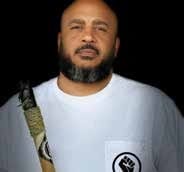
Shaun Walls served over two decades in the U.S. Army, a combat veteran leading soldiers and learning the value of action over words. He is a Pikes Peak Bulletin board member and is not compensated for his writing.