
Editor’s note Feb. 6: After this piece was published, a Black History Month proclamation was added to the Colorado Springs City Council’s Feb. 10 agenda. Read about it here.
For generations, the stories of black Americans and other marginalized communities have been filtered through systems that benefited from their exclusion. People were told to take up less space, to be grateful for what they were given, to know their place. Sometimes that message was delivered loudly. More often, it was delivered softly, behind closed doors, wrapped in procedure, disguised as neutrality. Racism is not always overt. Sometimes it is polite. Sometimes it is procedural.
That is exactly why recognition matters.
Public acknowledgements, especially those made in official civic spaces, are not performative gestures. They are affirmations of truth. They are reminders that resilience, leadership, creativity, and sacrifice have always been part of the fabric of our city and our country, even when systems tried to erase them.
One of the joys of serving on Colorado Springs City Council is the opportunity to honor our rich diverse community through Resolutions of Recognition. Over the past year, Council has formally recognized events and observances ranging from Juneteenth to Pearl Harbor Remembrance Day, each one a reflection of who we are and what we value.
At the request of a Councilmember or a member of the public, City Council may recognize events of historical importance, cultural celebrations, issues affecting community well-being, and individuals who have made meaningful contributions to our city. Five Councilmembers must agree in writing to place a resolution on the agenda. (You can view the City of Colorado Springs Rules and Procedures of City Council here.)
That is why, on Jan. 13, I submitted a request for a Black History Month Resolution to be presented at the final regular Council meeting of January, consistent with long-standing practice. When the agenda was released on Jan. 21, the Resolution was not included. For the first time in nearly a decade, Black History Month was not formally recognized by the City Council.
People noticed.
Residents reached out asking questions, expressing concern, seeking understanding. I shared the truth; I was unable to secure the five votes needed to place the resolution on the agenda. In response, community members showed up. They used their voices during public comment on Jan. 27, including NAACP President Angela Stevens, whose words reflected both frustration and deep care for this city.
A few days later, I learned through a reporter at the Gazette that a Black History Month Resolution is expected to appear on the Feb. 10 Regular Meeting Agenda presented by Council President Lynette Crow Iverson.
I will be watching closely for the agenda’s release and for the language of that resolution, because words matter and so do intent. My original resolution can be found here.
I dream of a day when we no longer need observances like Black History Month, because inclusion is so deeply embedded in our systems that recognition is no longer corrective. A day when diversity, equity, accessibility, and belonging are not treated as threats. Because opportunity is not limited. Success is not finite. There is more than enough room for all of us.
So, when people ask me, “What can I do?” my answer is simple. Start where you are.
Vote, participate, and be a part of the conversation. Support candidates who reflect the full diversity of lived experience in our community. Serve on boards and commissions. Stay informed beyond the headlines. Show up – not perfectly, but consistently.
And above all, remember this: democracy is not passive. It is something we practice together.
Black history is American history. And honoring it out loud, together is one way we continue the work of becoming the city we say we want to be.
If you are supportive (or not supportive) of this Black History Month Resolution, I encourage you to send an email to the City Council telling them so. You can email us: [email protected], [email protected], [email protected], [email protected], [email protected], [email protected], [email protected], [email protected], [email protected], or all together at [email protected]
If you believe there are other portions of this community that would be served by a resolution or proclamation, request one here. Just last week someone submitted a request for financial literacy month.
Other civic steps
- Vote, for the love of democracy, vote. Stop buying into the lie that your vote doesn’t matter. In Colorado Springs, we lost a force of nature, Colorado State Representative Steph Vigil by THREE votes. That’s right, THREE votes. Every vote matters.
- Support a political campaign. Think beyond the well-paid politician narrative. In Colorado Springs, your city councilors make $6,250 annually and your state representatives and senators make around $47k annually. Only your Mayor and El Paso County Commissioners have a livable wage around $130k and $150k annually. Help political candidates like Chauncy Johnson who is running to become one of the youngest state representatives in the history of Colorado. Democracy needs diversity of age, socioeconomic backgrounds, and education, and lived experience. People have told us diversity is race, gender, and sexual orientation. It’s so much more than that.
- Serve on a Board, Commission or Committee. City, County, State, or nonprofit. Being on a Board, Committee, or Commission is literally having a seat and voice at the table.
- Subscribe to a newsletter and actually read it. I get it – we are inundated by information. On your favorite digital calendar, set aside some time to read a newsletter or news and not just a headline. I recommend At the Dais, the Pikes Peak Bulletin, and my personal substack.
- Follow local, state, and national politicians on social media. You’ll learn a lot about their work, their goals, and who they are.
- Listen to a LOCAL podcast. Badly Needed and Long Overdue (BNLO) and Loving the Springs are two great choices.
If this feels like a lot, start small. Pick two. Number one should always be voting. What’s your second?
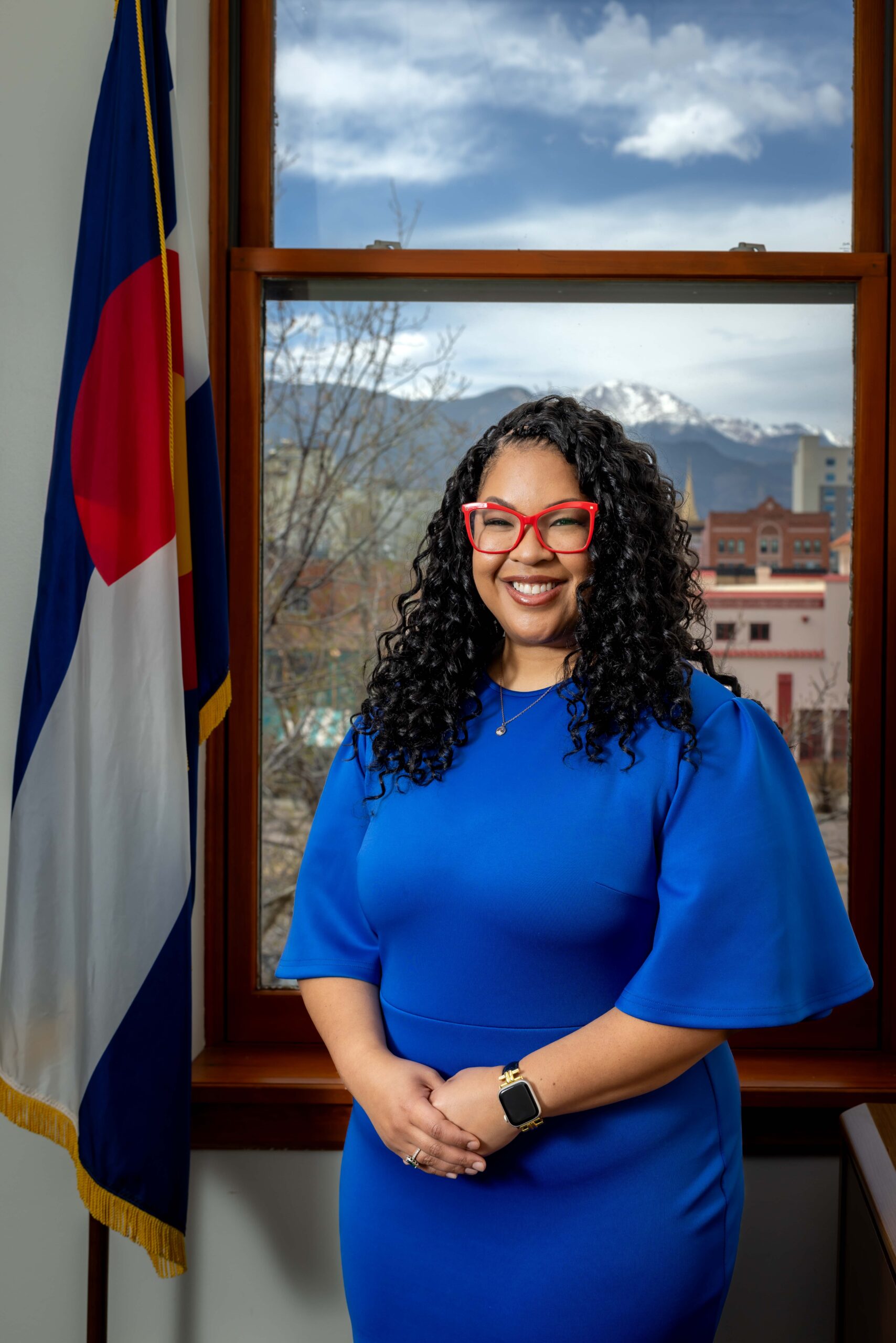
Kimberly Gold is a member of the Colorado Springs City Council. She is not compensated for her writing in the Pikes Peak Bulletin.