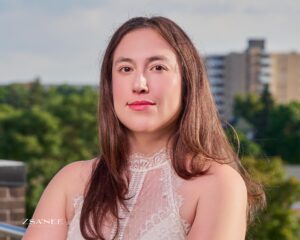
In the featured photo, from left to right: Cottonwood Center for the Arts’ Jacqueline Moulton, executive director Jon Khoury and digital media coordinator Claudia Folk Wright stage Life Drawing in their main gallery. Photo by Nick Raven.
When we think of podcasts, it’s easy to imagine true crime stories, daily news downloads and celebrity gab sessions – in other words: popular shows with big subscriber counts that make celebrities of their hosts, too. But if all you need is a quiet room, some cheap audio and video equipment, and a few free online accounts to distribute your show across a variety of popular platforms, podcasting potentially becomes a low-friction path to fame and fortune.
Locals have been producing podcasts for years, but now individual galleries and artists are embracing the format to highlight the work happening within their own walls.
Life Drawing, the new monthly show from the tiny, imaginative staff at the Cottonwood Center for the Arts in Downtown Colorado Springs, provides a window into the typical banter between their dry-witted executive director Jon Khoury and bubbly “woman about town” Jacqueline Moulton. Drawing stitches together their observations on life and the local arts scene with artsy interstitials that explore Cottonwood’s programs and events.
“It’s completely unscripted. Nobody knows what’s going to happen when we push ‘record,'” says Claudia Folk Wright, Cottonwood’s digital media coordinator, who edits the show with her husband.
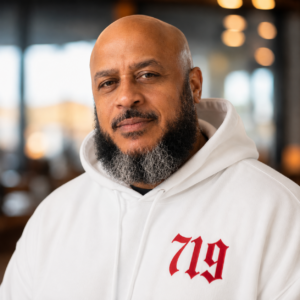
Blocks away, Clay Ross produces Artist Spotlight to highlight member artists of The Look Up Gallery, which shares space with ethical boutique Yobel, both owned by Ross and his wife Emily.
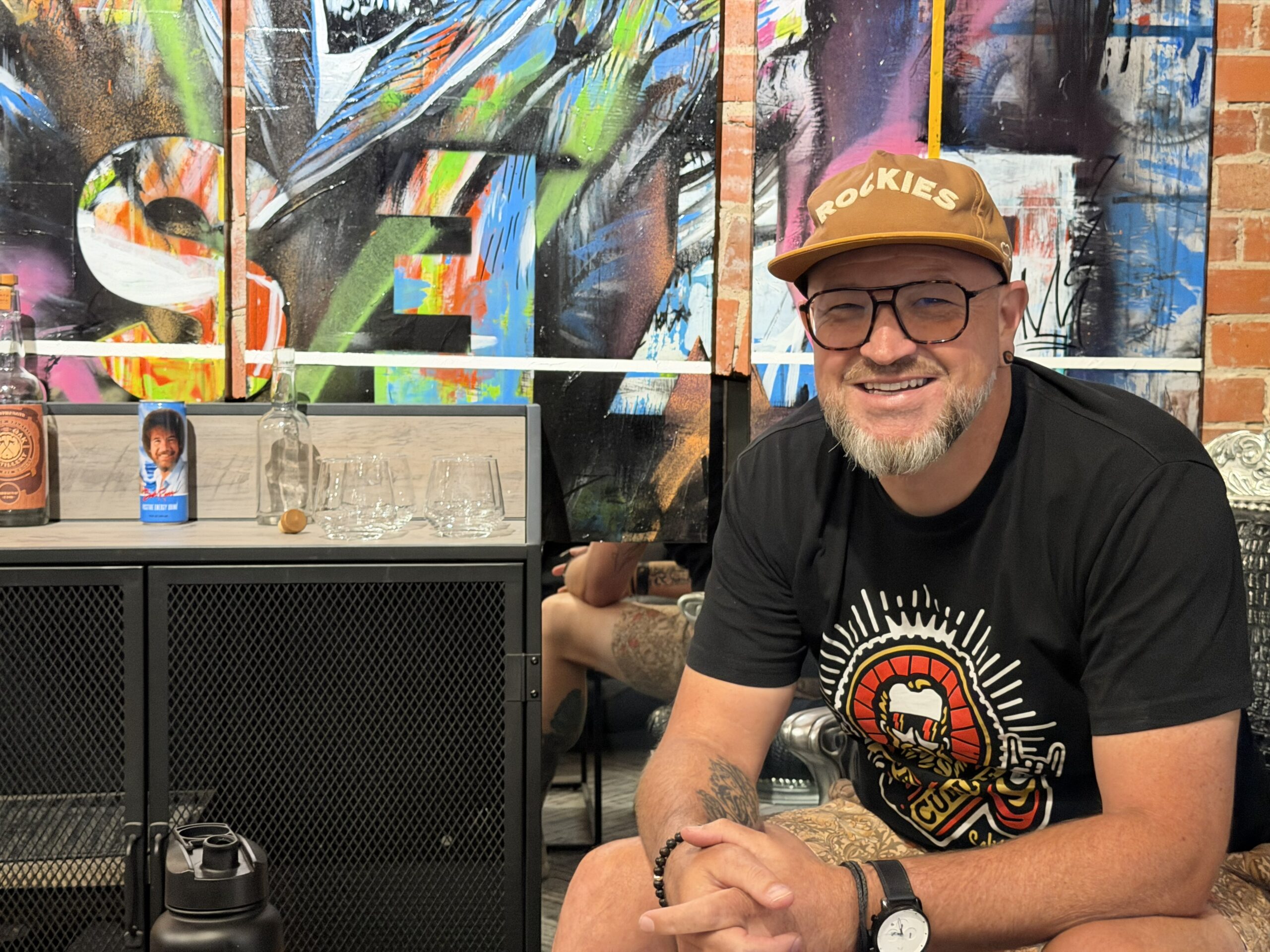
Inspired by Jerry Seinfeld’s Comedians in Cars Getting Coffee and David Letterman’s My Next Guest Needs No Introduction, Ross opens each episode by introducing a different artist with his easily brandished smile. Cutting to the Yobel bar, he pours drinks and the interview begins.
“You put a drink in someone’s hand and you’ve bought a moment with them,” Ross says. “It’s the culture that we are trying to build here: let’s just sit down, take a little breather and share a few stories.”
Besides being completely green to the nitty gritty work of producing a commuter-length digital show across a variety of internet platforms, Ross faced a more tangible challenge: convincing some of his extremely introverted artists to appear on camera at all.
“One of them took a gummy before the interview because she was so nervous,” Ross explains.
But what if you’re a creative who’s more interested in the “sit and chat” part of the podcast creation process and less so on the production side? Maybe you don’t own the space, the equipment or have specialized recording talent?
Enter: Kevin Davis and Treehouse Creative Workspace.
Early in his career, Davis moved to Los Angeles to become a professional songwriter. When the podcast medium blew up, he fell in love with it.
“Seeing cool people in the studio doing these podcasts, I was like, ‘Man, one day I want to have a podcast studio,’” he says.
Davis returned to Colorado Springs in 2016 to support his sick mom, but stayed when he met his future wife Kim. He soon built his podcast studio across from Colorado Springs City Hall featuring a casual “living room” setup while other podcasts were still recording at radio station-standard gray desks.
It was ahead of its time, and initially tough to sell to potential customers. Just as business was gaining momentum, Covid forced him to abandon the location.
Over half a decade later in an unassuming strip mall on the city’s east side, Treehouse is the fulfillment of the Davis’ dream. Not only could he resurrect his dream podcast studio, they could combine his photo and videography business – Guerrilla Media – and her professional makeup and beautification business – Kim Clay Artistry – but they could add Winni Carter’s Three Moons Marketing into a one-stop creative shop.
But Davis doesn’t just record the show, he helps clients understand the entire podcast pipeline from ideation to download.
“It’s funny because I feel like I’m more in the business to discourage you from doing it,” Davis says.
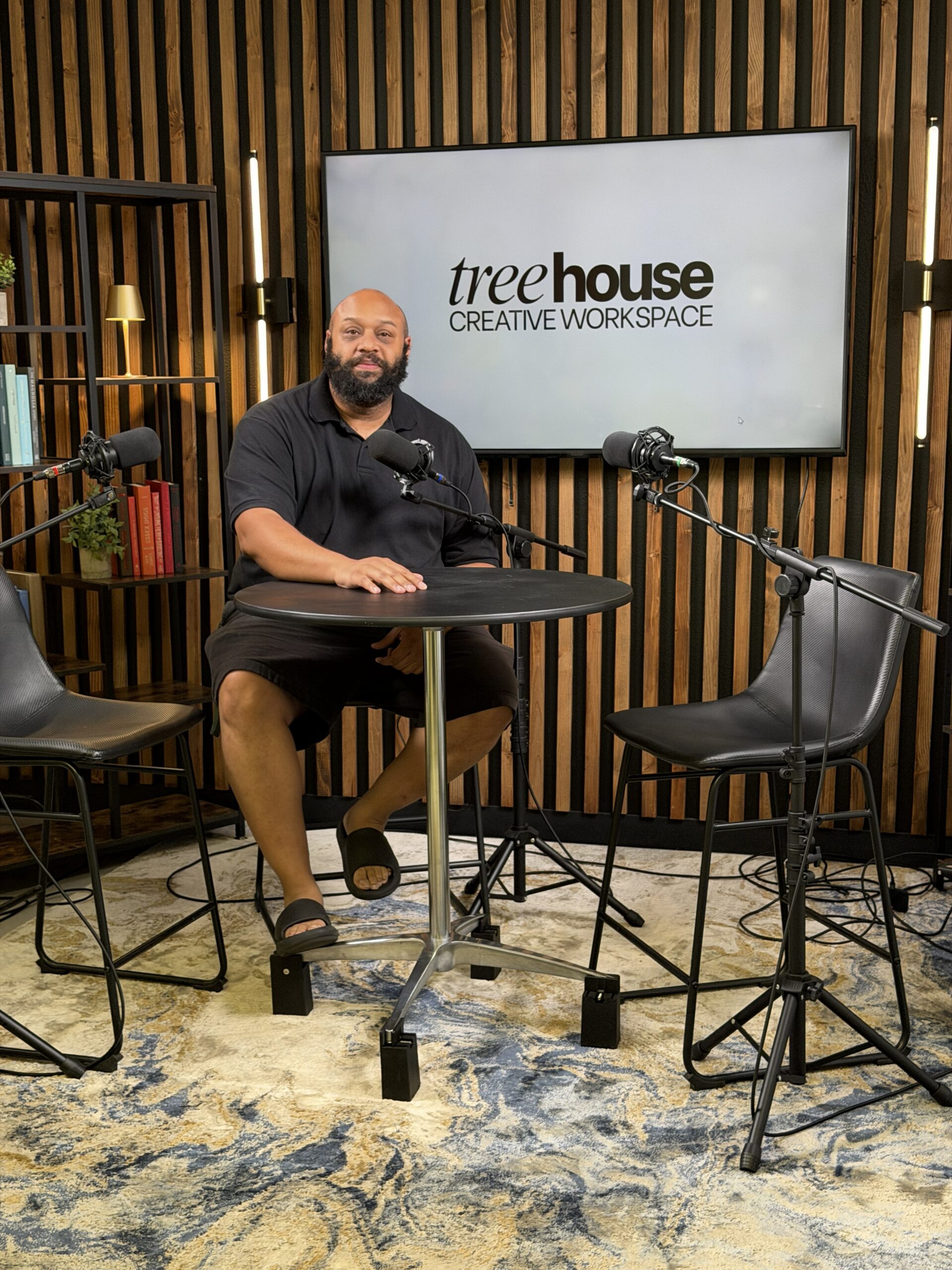
He places his customers into two buckets: those seeking to become influencers and those seeking to augment their business. While podcasts are relatively easy to produce, building a following takes time and talent. Justifying those costs as a business and defining your show’s effectiveness becomes a unique challenge.
For those starting out on their podcast journey, Davis says consistency is how you find success.
“Don’t look at numbers, don’t look at who’s downloaded it, because it’s all about building a consistent path of content. If you can only do it once a month, you pick a day, you pick a time, then you’re going to make sure you meet that every time,” he says. “If you’re doing this to become famous … it’s probably not gonna work out for you.”
In a city that doesn’t publicly fund the arts, a business like Cottonwood has to be self-sustaining. Since their building operates at capacity, Drawing serves as a way for them to elevate the local arts conversation outside the venue and get people interested in the local arts.
“There’s not that many more ways we can make money inside this building, so we need to think about how we can take our show on the road [as] a potentially monetized thing at some point,” Khoury says.
For Ross, his Spotlight isn’t just a front door for his member artists, he hopes it’ll attract new eyeballs to their dual-function location as a whole.
“People come in for a drink or for the boutique and then, ‘By the way, check out this gallery,'” he says. “We want these interviews to be like, ‘Oh, I know something about this person now.’ [Listeners] can get directed to their art show or their website, or come meet them on a First Friday here.”
Drawing co-host Moulton, who also teaches creative writing at Cottonwood, recognizes that their show’s success doesn’t need to fit neatly into a spreadsheet.
“I had a student once who was like, ‘I listened to the podcast and it makes me excited to come in here and be a part of the community,'” she says.