Colorado Springs Utilities (CSU) will be raising rates for natural gas customers in 2026 as part of a Sept. 30, 2025, consent agreement with the Pipeline and Hazardous Materials Safety Administration due to corroded and leaking natural gas lines.
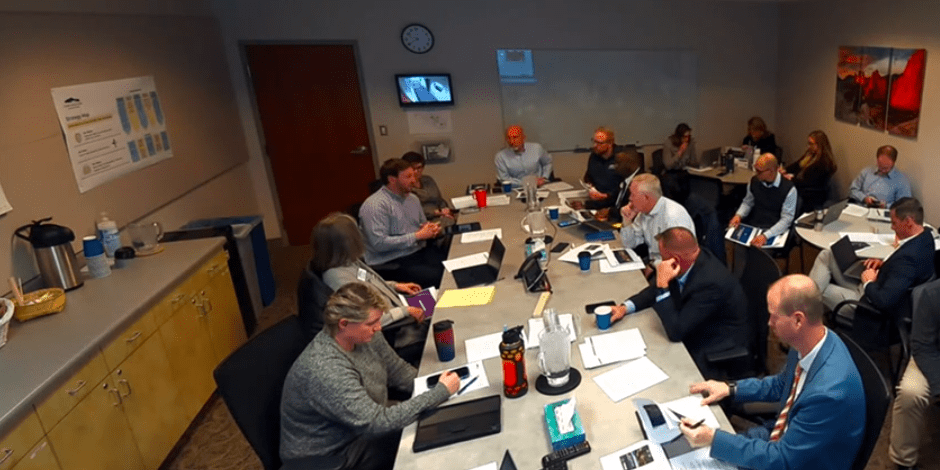
The Colorado Springs City Council serves as the CSU board. According to a recent CSU Board work session, an increase of $7 to $10 a month for residential customers and $14 to $20 a month for commercial customers will potentially go into effect in July of this year.
Since 2012, CSU has been implementing its Distribution Integrity Management Program (DIMP) to replace bare steel gas lines, which are susceptible to corrosion and leaks. Colorado Springs’ natural gas distribution system is composed of 2,751 miles of main lines, including 1.87 miles of bare unprotected steel main lines. The natural gas main lines vary in size, from diameters ranging 2″ or less to over 12″.
Beginning in August 2017 and continuing through March 2018, the Colorado Public Utilities Commission (COPUC) conducted a “Comprehensive Corrosion Audit” of CSU’s pipeline corrosion program procedures and records for its gas distribution pipeline system. According to an Oct. 21, 2024, Notice of Proposed Safety Order sent to CSU CEO Travas Deal, CSU committed to a “systematic approach to enhance (its) Corrosion Control Program and to identify areas of active corrosion” on the bare steel lines, which included retention of outside consultant expertise to make appropriate changes to its Corrosion Control Program by March 2020.
On April 18, 2018, COPUC issued a Notice of Probable Violation to CSU because CSU failed to cathodically protect its affected pipe as required by statute, and CSU failed to provide records of the initial and 3-year evaluations for active corrosion on these lines as required by statute. CSU failed to produce documents requested by COPUS in 2017 on its corrosion control efforts until 2023.
According to the Proposed Safety Order, “The 2023 Active Corrosion Analysis report showed CSU had still failed to cathodically protect its affected pipe as required by [statute], despite finding multiple indications of active corrosion through direct assessment and leak surveys. Cathodic protection testing records show CSU had never cathodically protected its affected pipe, resulting in active corrosion and a high number of Grade 1 and Grade 2 leaks. As of December 2023, 85% of approximately 3.47 miles of affected main line pipe was directly assessed and documented three instances of active corrosion. Leak surveys of CSU’s affected service line pipe from 2020 through 2022, identified 51 corrosion leaks and one instance of pipe exposure with pitting. Of the 51 active corrosion leaks found, 32 were classified as Grade 1 and 19 as Grade 2, all of which were hazardous to public safety. Many of these service line leaks are located in residential neighborhoods and business districts, including high-occupancy and multi-story buildings.”

CSU’s initial plan to remediate the lines would take approximately 80 years to replace all 8,001 bare steel service lines at a rate of 100 service lines replaced per year. The Proposed Safety Order found that “CSU is not replacing its affected pipe at a sufficient rate where it will be able to mitigate the risks of failure for its remaining affected pipe.”
The 2025 consent agreement requires CSU to replace bare steel lines within a 10-year timeframe, from 2025 through 2034. A Jan. 22, 2025, CSU staff report noted the cost of the project as $300,000,000 over 10 years, or $30,000,000 annually. The proposed “Natural Gas Safety Compliance Charge” is anticipated to generate an estimated annual revenue of $14.5 million to $28.2 million from 2026 to 2029.
“That cost is additional cost in this outside of what was included in the five-year rate plan,” said Scott Shirola, CSU’s pricing and rates manager. “Our base rates that were already approved by City Council don’t fund this additional work. What we’re proposing is the addition of a new charge to the natural gas bill, termed the ‘Natural Gas Integrity Federal Compliance Charge,’ which would act as a bill rider, and we’ve talked about bill riders before, as potential things come up outside of the five-year plan as an approach to fund those types of mandated work. Bill riders are temporary in a sense and therefore a defined program.”
However, the rate increase will likely extend well beyond 2029. “At that point, we can evaluate whether to maintain it as a separate bill item or to roll that ongoing cost into our base rates since a lot of this work will continue at a higher level than it is today just to maintain replacements on our natural gas system,” said Shirola. “So once we get through this initial phase, the cost doesn’t go away. So there’ll be some level of this — the DIMP is an ongoing program.”