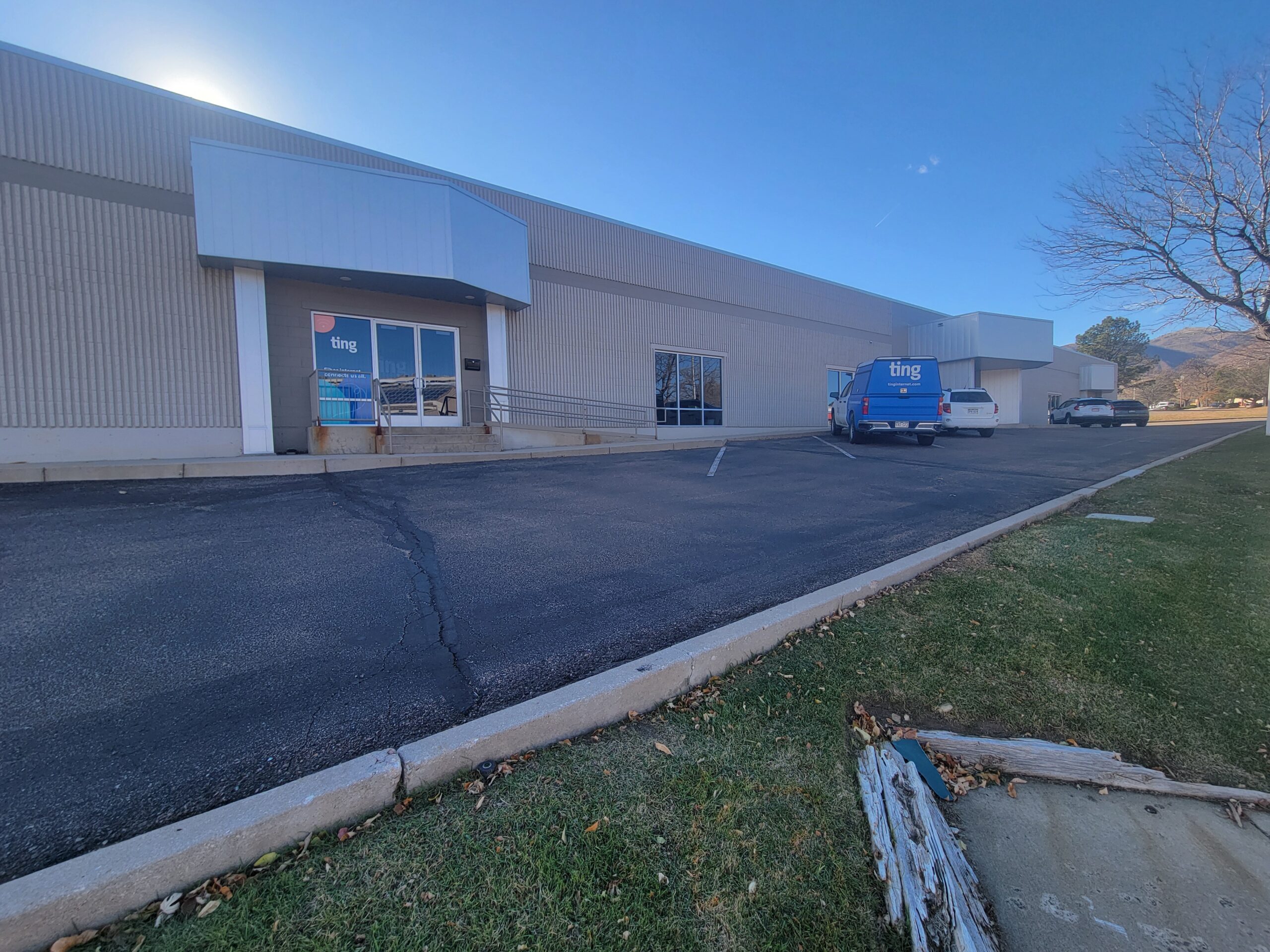
The parent company of Colorado Springs Utilities’ anchor tenant for its $600 million high-speed broadband fiber project is selling the subsidiary, according to a published report.
It’s unclear what this means for the Utilities project, which the Bulletin reported last month has been behind schedule and has led to litigation in both federal and state court.
Utilities declined to comment when asked about a Nov. 10 report posted to an industry website, BroadbandBreakfast.com, which said that Tucows, Inc., a Canadian-based company, is trying to sell Ting Fiber Inc., the anchor tenant for the Utilities project.
The Colorado Springs City Council doubles as the board for Colorado Springs Utilities.
Utilities Board Chair Dave Donelson didn’t immediately respond to a request for comment.
But Utilities Board member Nancy Henjum, who previously raised questions about the project, told the Bulletin via text message that she’ll renew her request for a “full briefing” on the fiber line and “protection of our interests.”
Tucows declined to comment and pointed to its most recent Securities and Exchange Commission (SEC) filing in which it outlined Ting’s financial picture.
The Broadband Breakfast post was shared on the Reddit social media site where commenters expressed concern about whether Ting was a viable provider.
The Broadband Breakfast story noted that Ting had lost 200 subscribers in the third quarter of this year and that it’s been “selling parts of its footprint,” which is the reason for the reduction in subscribers, the company said.
The industry site also quoted Elliot Noss, former Ting and Tucows CEO, as saying during a company earnings call in early November, “We have continued to divest of non-strategic assets, which this quarter includes the southern part of our Cedar footprint in Colorado. A reminder that these are markets where we no longer have the capital to build, and network construction inventory we no longer intend to use.”
Tucows announced in 2019 that Ting acquired Cedar Holdings Group, a telecommunications provider serving several markets on the Western Slope and in northwestern New Mexico. That release said acquisition of Cedar would add about 1,400 customers and 6,400 addresses passed by fiber to the Ting Internet footprint.
In contrast, Springs Utilities has said its goal is to reach 275,000 addresses in Colorado Springs and is contractually obligated to Ting to reach 150,000 addresses by May 2028. Utilities had reached roughly 45,000 addresses by this fall.
In its Nov. 19 article, the Bulletin noted the City Auditor’s Office reported in 2024 that the project was behind schedule, though Utilities officials now say it’s caught up and moving forward.
In addition, the fiber project has given rise to two lawsuits.
In October 2024, ADB Companies LLC, based in Pacific, Missouri, Utilities’ contractor to install the fiber line, sued Utilities over ADB’s $266 million contract, alleging that the city agency was “unable to keep up with the locating demands of the project, resulting in delays,” and “crippling” the company’s work schedule. Utilities cancelled the contract, prompting ADB to seek $61 million in the lawsuit. Utilities countersued, alleging ADB failed to perform as expected. The case, filed in state court, goes to trial in April. (Utilities has since hired new installers.)
In January 2025, Metro Fibernet, based in Overland Park, Kansas, filed suit in U.S. District Court, Denver, claiming the city interfered with its fiber installation, which would directly compete with Utilities’ anchor tenant, Ting. The lawsuit alleged the city defamed Metronet to citizens and contractors and blocked excavation permits. The case was settled in April with the city agreeing to allow Metronet access to easements and rights of way.
The Bulletin’s November story also noted that Tucows reported in SEC filings that Ting agreed to cut its workforce by 13% last year, that Ting incurred losses of more than $240 million in 2023 and 2024 combined and that Ting saw operating cash flow deficits of about $100 million for those two years. Meantime, Tucows’ stock price has fallen from $91.18 on Nov. 5, 2021, to $21.08 as of Dec. 2, 2025.
Utilities has received about $3.6 million in fees from Ting so far and predicts the company will pay $464 million over the 25-year contract, through 2048.
Utilities has spent over $100 million and plans to spend $319 million more in the next four years on the fiber project.
Asked about the prospect that those payments from Ting won’t come through, Utilities said in response to questions last month that the agreement carries little risk. “Our financial risk is mitigated by a parent guaranty: If contractual obligations aren’t met, Tucows will cover 50% of any losses,” Utilities said.
Asked about the reported effort to sell Ting, Board member Henjum said, “I know that we have protections in our contract with Ting (and connection to the parent company) that ensure our requirements will be met in the event of a bankruptcy or sale of Ting. And based on this news I have asked for a full briefing as to all the permutations related to a sale and the protection of our interests.”
Via email, Tucows said, “We can not comment on ongoing business matters. Tucows disclosed a process to review strategic alternatives for Ting in our most recent 10-Q [SEC filing] and quarterly management remarks. Those disclosures provide the most up-to-date information.”
In that filing, Tucows reported that Ting showed a net loss of $26.7 million and $23.3 million for the three months ending on Sept. 30, 2025 and Sept. 30, 2024, respectively. Cash flow deficits were reported as $7 million and $15 million for the third quarter of 2025 and 2024, respectively.
“Given the ongoing capital needs of Ting, the Company has commenced a process to review strategic alternatives for the Ting business,” Tucows said on page 50 of the filing. “Ting may not be able to meet its financial obligations over the twelve months following September 30, 2025 without additional financing…. Ting currently has limited capacity to expand its borrowings under the Base Indenture and it is uncertain whether Ting will be able to access additional Milestone Funding under the redeemable preferred unit facility….
“If we are unable to raise additional capital when required or on acceptable terms or complete a sale transaction, we may have to consider other alternatives to raise capital or significantly restrict our operations or obtain funds by entering into agreements on unattractive terms, which would likely have a material adverse effect on our business, stock price and our relationships with third parties with whom we have business relationships, at least until additional funding is obtained, and which could result in additional dilution to our stockholders. If we do not have sufficient funds to continue operations, Ting could be required to seek bankruptcy protection or other alternatives that would likely result in our stockholders losing some or all of their investment in us….”
Risk factors, the filing said, include “slower-than-expected subscriber growth and ongoing operating losses,” which could “impair Ting’s ability to meet future financial and operational obligations and limit its access to additional funding.”
Tucows also notes that it might not be successful in identifying and implementing “strategic alternatives for Ting in a timely manner, or at all,” which could bring “negative consequences,” including accounting and advisory fees, loss of certain key employees, reputational harm, and potential litigation.
Update Dec. 5, 2025: City Matters did a podcast episode on the fiber project with this article’s reporter Pam Zubeck.