Early fall in Colorado is a time of transition. September is still shorts and t-shirt weather, wildflowers are still in bloom, and everyone seemingly waits with bated breath for the fall colors to change (see my previous column for the Pikes Peak Bulletin for my suggestions on where to go to see the changing aspens). Early October is often fairly warm, and so far this year is no different. But October is when summer gives up its last gasp – and grasp – and we finally get into colder weather.
It sneaks up on you, and it’s easy to get complacent when you start out the day in warm early October weather – maybe wearing your favorite shorts and tee – but then get caught when the shorter hours of daylight catch you on the trail in the dark, and suddenly much colder weather. And by the end of October, it can be pretty chilly. I don’t know what it is about this area, but Halloween has, for as long as I can remember, almost always been very cold, regardless of what the weather was like the day before and even the day after. All of this makes the old advice of bringing layers more pertinent than most other times of the year.
While being chilly on the last part of your hike is probably the mildest inconvenience you can have if you don’t pack a few layers, becoming the subject of a search and rescue mission is much worse. A slip and fall that leaves you unable to walk or being caught in the dark without a flashlight because it got dark earlier than you expected, along with not having adequate outerwear can result in having volunteer search and rescue members coming to your rescue.
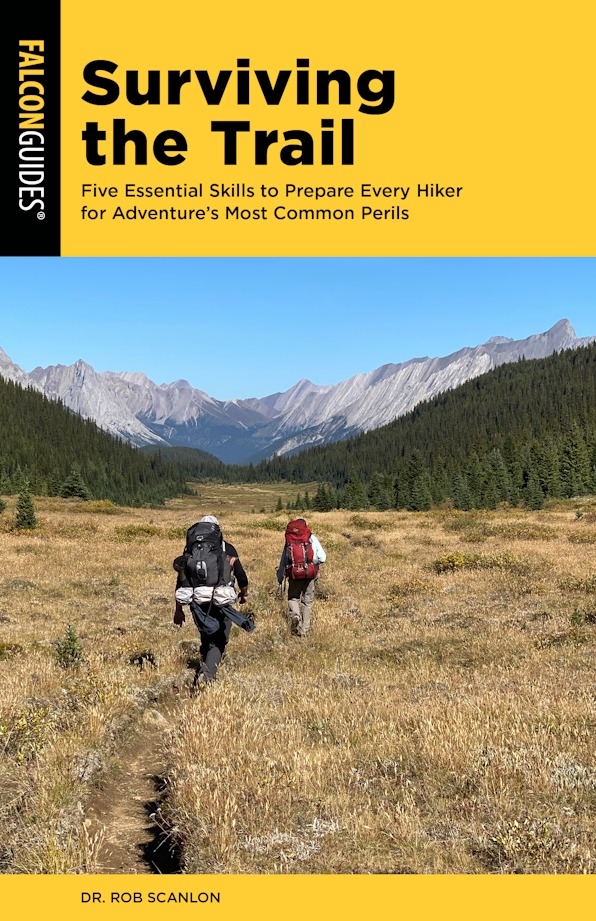
All of this is a long way of reminding you to be prepared and properly equipped when on your fall hikes, and also to bring your attention to a new book on the subject, published by Falcon Guides.
“Surviving the Trail” by Dr. Rob Scanlon teaches “Five essential skills to prepare every hiker for adventure’s most common perils.” The five “skills” in the book cover hydration, weather and managing body temperature, crossing waterways, awareness of heights and risks of falling, and land navigation.
Each section – skill – starts with real-life, documented scenarios in which hikers who did not possess the skills necessary found themselves in danger, sometimes with fatal results. Instead of just saying, for example, “this hiker died because they didn’t drink enough water, so you need to bring plenty,” the book explains how to recognize the different stages of dehydration or hypo- and hyper-thermia, how heat conduction and convection works, how they affect the body, and what to do when you are in danger. The book is rife with statistics, such as 79% of lost hikers in Oregon were solo hikers, and that males have a 50% higher likelihood of becoming lost and becoming a SAR mission than women. Roughly 66% of lost hikers were over 30 years old. (Side note: I’m a little worried that I hit each one of these demographics. I made sure to read this section several times).
Experienced hikers might approach this book with the “I know, I know … 10 essentials … be prepared, blah blah blah” which is a natural reaction, but … as long as I’ve been hiking and coming from a decades long career as a first responder, I found that the book was not only a great refresher of the basics, but also a great learning experience. In each skill section, there was plenty to learn and lots to consider.
The Colorado Search and Rescue Association reports there are about 3,000 search and rescue incidents annually. The goal of your hike should be to not become the target of a SAR mission, or to have it become a news story. This book can help you achieve that goal.
“Surviving the Trail” is available in both print and digital formats, direct from Falcon Guides or at book retailers.
Be Good. Do Good Things. Leave No Trace.