Colorado Springs has never been the most queer-friendly city. Just one year after anti-LGBTQ+ Evangelical Protestant organization Focus on the Family moved their headquarters to the Springs, Colorado voters approved Amendment 2 with a 53% majority, legalizing discrimination based on sexual orientation in the state constitution. Because the amendment was written by religious fundamentalists from Colorado Springs, the city earned the moniker, “The City of Hate and Bigotry” and was the target of nationwide boycotts until the U.S. Supreme Court struck down Amendment 2 in 1996.
Colorado Springs’ reputation persists to this day, perhaps for good reason. Less than three years ago, the Club Q nightclub shooting made headlines, and three months ago, the U.S. Supreme Court agreed to hear a case filed on behalf of Colorado Springs counselor Kaley Chiles, who is challenging Colorado’s ban on conversion therapy.
Enter Pikes Peak Pride, a two-day celebration of the LGBTQ+ community in downtown Colorado Springs. This year’s festival takes place June 14-15 in Alamo Square Park.
We are all in this together. – Jessica Laney, Pikes Peak Pride president
Though the complete festival schedule has not yet been published, Pikes Peak Pride president Jessica Laney offered some of the highlights. The festival will feature over 150 vendors, including 18 food trucks and stalls. The mornings will begin with yoga in the park, and aerialists from Urban Cirque will have their rigs set up for the entire festival, providing demonstrations and hands-on tutorials to interested passers-by. You might catch weddings and vow renewals on the main stage between performances by musicians, dancers and drag artists (including Derrick Barry and Judas Joe Manson from “RuPaul’s Drag Race”).

Of the six bands playing Pikes Peak Pride, you can’t miss Colorado Springs art-rockers Glitter Porn on Sunday. Their whimsical tunes make queer allegories of everything from monster movies to clowns, and their onstage presence is electrifying, if a little unhinged.
“Colorado Springs is a very divided city,” said bassist Alek Clark. “Having those safe spaces and making Pride as loud as possible are really crucial.”
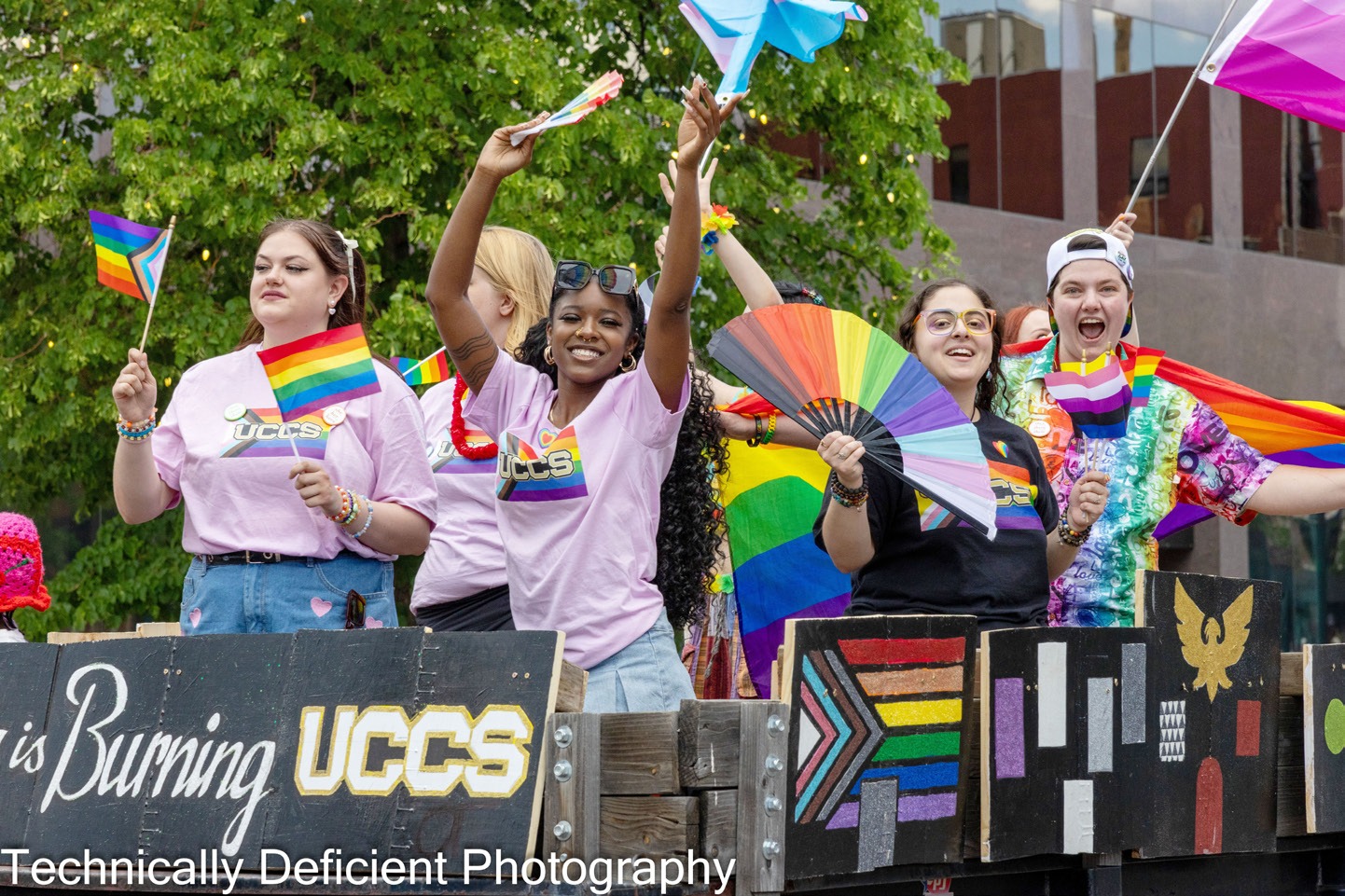
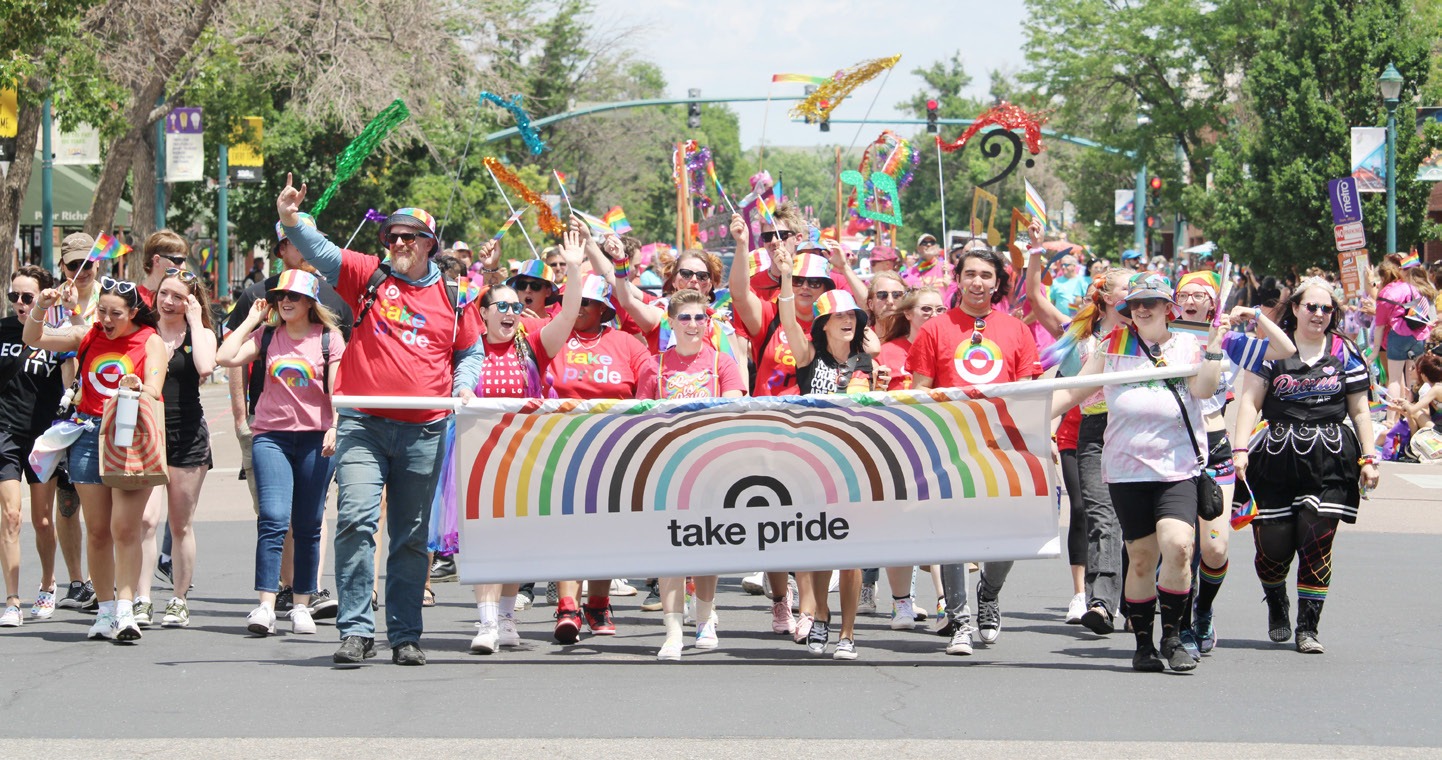
Loudest of all will be the parade, beginning at 11 a.m. on Sunday, June 15 in America the Beautiful Park. The procession will go down Colorado Ave. to avoid construction on Tejon St.
While Pikes Peak Pride will certainly be a party, the educational components are just as vital. There will be six classes on Saturday covering subjects including allyship, fighting anti-LGBTQ+ legislation, self-defense and self-care. Volunteers will be giving out free slices of pizza to all class attendees.
“We are all in this together,” explained Laney, “And trying to educate ourselves on how to be able to move ahead during some of these troubled times that we’re in right now is a big part of that.”
Pikes Peak Pride’s 2025 theme, “Pride for All,” is an open-armed invitation. Features like the interfaith service, sober garden and Rainbow Youth Square accommodate the diversity of individuals under the LGBTQ+ umbrella.
The “Pride for All” theme is also a rebuttal to rising transphobia nationwide.
Just last October, Colorado Springs city council member Dave Donelson led the charge against Pikes Peak Pride when its allocation of Lodgers and Automobile Rental Tax (LART) revenue – which is distributed annually to events that attract tourism and bolster the economy – was increased from $40,000 to $60,000.
“A big problem for me … is the ‘T’ in LGBTQ,” Donelson said, as reported by Heidi Beedle in the Pikes Peak Bulletin. “Is that something that we want to spend tax dollars on?”
Continually diminishing financial support has been an issue for pride festivals nationwide as corporate sponsors have pulled funding amid DEI rollbacks.
“We did lose a couple of our bigger sponsors,” Laney shared, “but we’ve made up for it in an outpouring of smaller sponsors.”
Beyond a projected attendance of 25,000 people and economic impact of over $1 million, Laney’s goals for this year’s Pikes Peak Pride are “to increase awareness and advocacy” and “promote education and acceptance.”
“We’re not going away. We’re here. We’ve been here. We’re staying here,” she added. “We’re going to continue to make ourselves visible and advocate for what’s right for everybody.”