Republished with permission from KRCC – Read the original article or listen to the radio version here
Colorado Springs resident Bradley White says a simple lever in his laundry room sends water from his washing machine outside and helps water shrubs in his yard.
White has installed these residential graywater systems professionally in California for years. But in Colorado Springs, where he lives, city code prohibits graywater use and only allows residents to use water once.
Court records show White has filed both a civil case and a water court petition challenging the city’s one-use water rule.
“My intent with this lawsuit is just to try to get the city to let us… reuse some of our water,” White said. “Maybe not all of it, but some of it.”
White wants to know why Colorado Springs residents cannot legally use graywater and submitted his question to CPR’s Colorado Wonders.
Graywater generally refers to reused household water from washing machines, showers and sinks. People often use it to irrigate landscaping or flush toilets instead of sending it directly into the sewer system.
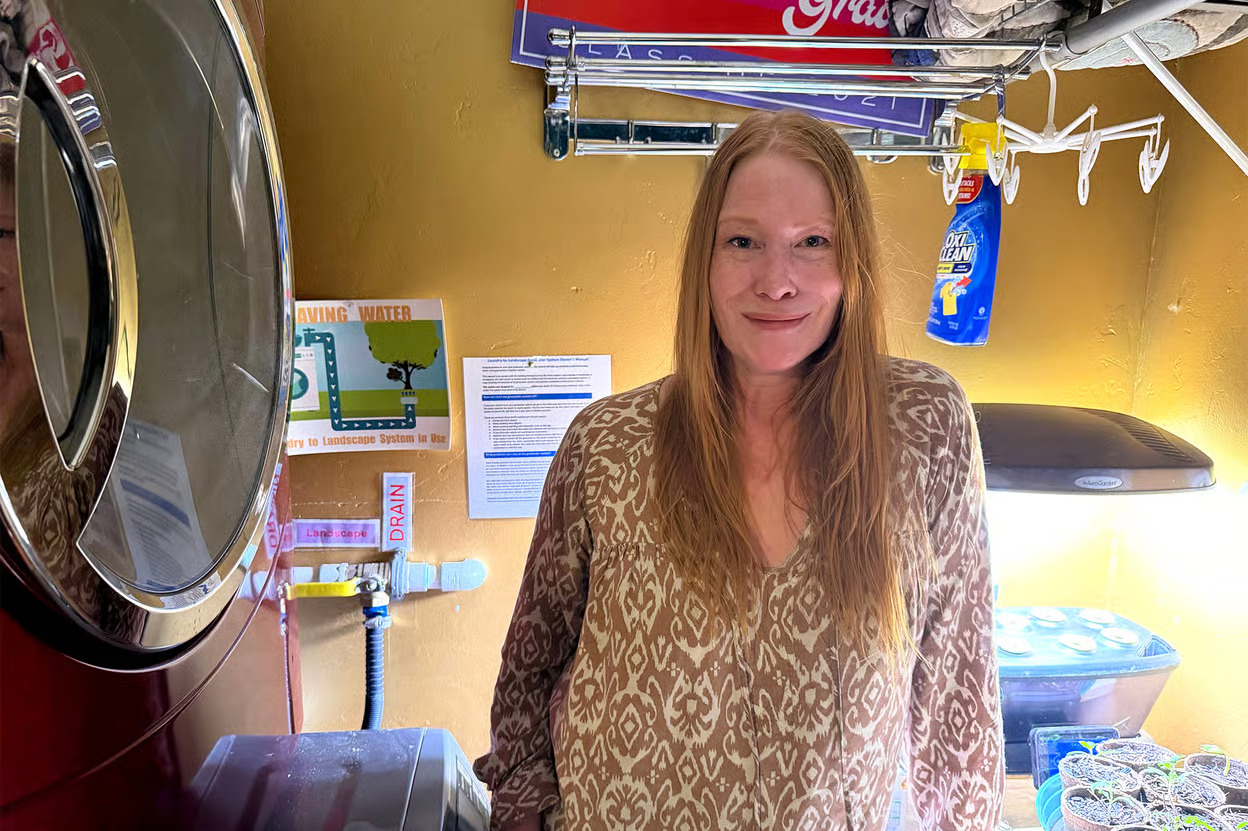
Inside the Colorado Springs home White shares with his partner, Tamar Lalenya, a washing machine drains into a simple pipe-and-lever setup that redirects water into mulch basins outside.
“So when we’re doing landscape, we have it turned this way,” Lalenya said, adding that only natural soaps are allowed. “If we do want to do a load with bleach, we’re going to switch it to drain and it’s that simple.”
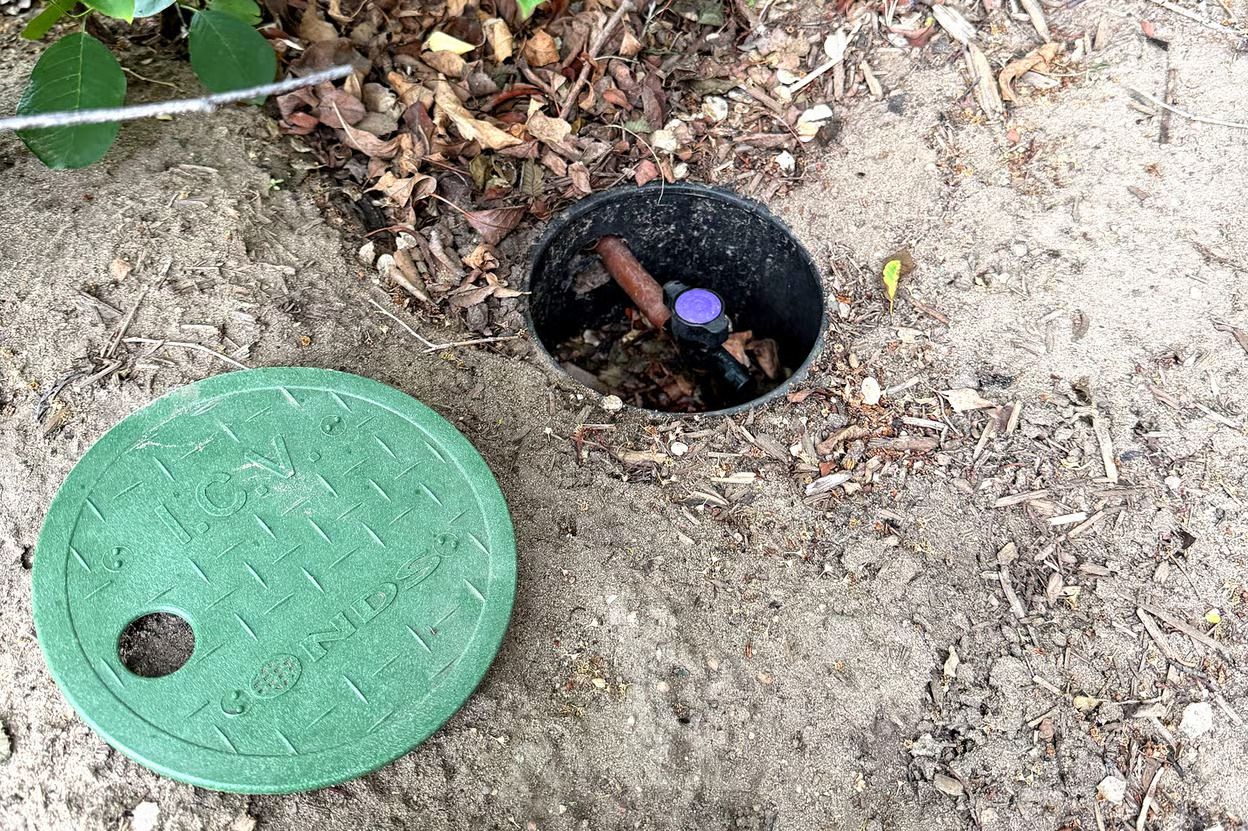
Outside, the laundry water feeds bushes and trees in the yard.
“All you do is deal with that lever inside and we don’t have to water these things at all,” Lalenya said. “They’re certainly getting a lot of water and growing quite big.”
Ironically, White was not home during CPR’s visit because he was in California installing another residential graywater system there.
White said he got into this line of work during California’s severe drought years more than a decade ago. Most of the systems he installs are known as “laundry-to-landscape,” where washing machine water is diverted directly outdoors.
“It’s just like pouring water in a hole,” White said over the phone. “It’s that simple.”
The city of Colorado Springs doesn’t see it that way
State-compliant graywater systems can be expensive, and few Colorado communities have widely adopted programs, the Colorado Springs Utilities wrote in an emailed statement explaining its stance on graywater.
The city also wants more time to study how home systems would fit into its broader water reuse strategy. Right now, the utility captures and reuses water through a centralized treatment system.
Over the last decade, graywater rules have shifted across Colorado.
For years, cities and counties had to opt in to allow graywater systems. But lawmakers passed House Bill 1362 in 2024, flipping the process. Now, graywater is allowed statewide unless local governments specifically opt out. Colorado Springs did just that.
Even in communities that allow graywater, experts say it is difficult to measure exactly how much water or money the systems save.
“On its own, graywater is probably not the most impactful solution,” said Kevin Reidy, a water-efficiency specialist with the Colorado Water Conservation Board.
Still, Reidy says graywater can contribute to conservation when paired with drought-tolerant landscaping and efficient irrigation systems.
“In our water plan, it’s kind of important to highlight these alternative water sources,” Reidy said. “Not every solution is off the table.”
Utilities in places like Los Angeles estimate that a family of four using a graywater system could potentially reuse more than a thousand gallons of household water a week.
Across Colorado, graywater adoption remains patchy, making statewide impacts difficult to track.
One example exists at the CSU Spur campus in Denver, where treated shower and sink water is reused to flush toilets inside the building.
Sybil Sharvelle, a Colorado State University professor who has studied graywater systems for nearly 30 years, says even newly constructed commercial projects can be difficult to quantify.
“I don’t even actually want to put a guess on it,” Sharvelle said. “It’s hard to quantify because we don’t always know the number of people showering in that building.”
Still, she said the building substantially reduces potable water use by reusing graywater for toilets. Sharvelle said many graywater projects focus less on financial savings and more on sustainability.
“A lot of times, the motivation to do these kinds of things (is) more around green building initiatives and being stewards of our land and water,” Sharvelle said.
That motivation resonates with White
“It’s just like common sense,” White said. “I want to conserve any resources we have and water’s a great resource, and why not try to conserve it more?”
Friends and neighbors with similar motivations have asked him to install graywater systems at their homes in Colorado Springs and Manitou. But White legally can’t.
“If the city did allow people to install laundry-to-landscapes…I could start doing what I do in California (in Colorado) and hire people, train people,” White said, adding that he wants to go about things “the right way,” by pulling permits and following other rules if graywater were allowed.
He also expects the utility to issue a formal notice for violating the city’s water policy. But he said he hopes Colorado Springs will eventually create a legal pathway for at least some residential graywater reuse as drought and climate pressures continue across the West.
“It would improve a lot of people’s lives.”