I recently learned something fascinating.
Did you know that in many large, urban cities across the globe, the pedestrian crosswalk buttons are disconnected – and have been for decades?
As technology advanced, pedestrian phases were automated in many cities with dense populations, rendering the human interaction of a button pointless. Removing the buttons would have been a costly endeavor but there was another reason for keeping them. The buttons – even in their non-functioning state – served a bigger purpose.
These non-functioning pedestrian crosswalk buttons created an illusion of control. They allowed the pedestrian to believe that their input was heard and acted upon, as the light would soon turn to give them the right to cross the street safely.
Press the button. Sit and wait happily believing you have caused the upcoming light change.
It’s performative at the highest level of the word.
In 2020, the City of Colorado Springs made a decision to launch a committee designed to bridge the gap between community and the city’s police force. A commendable move by a city like Colorado Springs, whose police force rating from with the Police Scorecard Project was a dismal 44% with low marks in transparency, excessive force complaints, discrimination complaints and force used during arrest.
The nation was reeling from the death of George Floyd and Colorado Springs was further disturbed by the CSPD shooting of De’Von Bailey. This move to be proactive in the space of law enforcement oversight transparency and oversight was a welcome one by the community. I know that I, as an advocate for change – for oversight and transparency in the legal system, to include policing – was very encouraged by this move.
The mission of this new commission looked good:
“The mission of the Law Enforcement Transparency and Advisory Commission (LETAC) is to make recommendations to City Council which would promote improved understanding and relationships between the police department and the public.”
But that’s where it started and stopped – at looking good.
I applied to be a member the year that LETAC launched but was never invited in for an interview. I assumed me being outspoken on police violence, racial profiling and other systemic issues in the police and legal system probably kept me out of the running.
I think there were a lot of qualified individuals in the same boat as me.
I sat back and watched over the next few years, waiting for action that never came. The silence around what LETAC could actually do or accomplish became so deafening that I almost forgot the commission existed. Until early 2024, when I received an email saying a seat had opened on LETAC and they were looking for people interested in serving.
“Well, of course…” I thought. My application was still in the system – all it took was a re-submit. In what was certainly a surprise to me, I was called in for an interview.
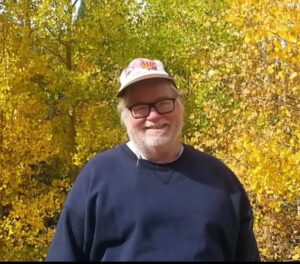
I came as myself to that interview. I was vulnerable, transparent and honest about who I was and what I advocate for. I’m a dad of three beautiful children who wishes to see them grow up in a city that embraces equality, diversity and righteousness for all of its residents.
The members of LETAC voted me in and I was set to come before city council for the formality of being commissioned onto the committee. The commission told me I would even receive a small welcoming gift.
I had received notice that there was a group of citizens set to protest my addition to this committee. And on August 13, 2024, in front of my wife and my kids, that is exactly what happened. For an hour that morning I had my character attacked in front of my family while the city council allowed decorum to all but disappear. I was labeled an anti-American hater of police by groups of people who had never even spoken to me.
The Colorado Springs City Council bought the whole show, too. They opted to re-vote right then and there, and voted to revoke my commission onto LETAC.
And in this process of removing my voice from LETAC, they discussed why they believed LETAC existed, as council member David Leinweber stated:
“LETAC needs to be an advocate for our police force… we have declining morale in our police force that is astronomical… I would be surprised how many families and kids have a matchbox police car any more…”
And I was told by then city council president, Randy Helms, that:
“I think he can be a volunteer for other things and he can help represent his point of view in other ways … but just not on LETAC. I think being on this particular commission is not the right thing for the whole commission and the city itself.”
That afternoon, a local newspaper had run an article (which is not currently available in its online archive) with my picture, reporting the terms used to describe me in the city hall meeting including “anti-American and anti-police.”
By that evening, two Colorado Springs Police Department cruisers had parked themselves directly in front of my house – in a cul de sac – in an intimidating fashion.
The following day, in response to the dialogue in the city hall meeting, LETAC drafted and issued a press release reiterating and defining their mission:
For Immediate Release from the Law Enforcement Transparency and Advisory Commission regarding the 8-13-2024 City Council session and related media articles:
“The mission of the Law Enforcement Transparency and Advisory Commission (LETAC) is to make recommendations to City Council which would promote improved understanding and relationships between the police department and the public. It envisions ‘a city that values and solicits input from all Colorado Springs community members with its police department, as the foundation for transparent and inclusive service-oriented policing. We envision a community built on mutual trust between the Colorado Springs community and its police department.’ One of LETAC’s ordinance-driven goals is to ‘provide a conduit for the concerns and needs of both citizens and the police department to be shared and discussed with City Council.’ LETAC defines trust as ‘a community’s perception of law enforcement’s trustworthiness, comprised of three dimensions: benevolence (I believe you have my best interest in mind), integrity (I believe your words match your actions), and competence (I believe you are capable).’ LETAC defines conduit as ‘a metaphor representing persons or groups that facilitate communication between two or more people or groups to achieve the vision, mission, and goals of those diverse groups.’ LETAC was established by Ordinance 20-44. (Sourced from: Mission, Vision, and Goals written by the Commission and unanimously adopted by the full LETAC body, available on the city website. And unanimously adopted definitions of trust and conduit by the full LETAC body on May 6, 2024).”
The Colorado Springs City Council refused to make the press release public, and it was only made available to me through a Colorado Open Records Act request for it.
It was then that I realized that this commission – this committee that was supposed to provide transparency, oversight and bridge a chasm between the community and the police force – would be nothing but a performative move designed to give the illusion of input for the community.
The City Council didn’t want real change. And not only did they not want it – they worked extra hard to stop voices that might cause them to look inward from being part of it. They silenced my own voice before it could even be allowed to speak.
And this inability to invoke change – this missing power, this lack of authority – was not due to members not wanting it. After the debacle at the city hall, I attended several LETAC meetings and got to know a few members, and they wanted to see change. In fact, they were trying to go about it the right way – but that’s impossible when the original design is one that limits any power.
I recently reached out to vice chair, Andrew Hoskins, regarding the commission and the upcoming dismantling of it and he said, “Any commission set up for the purpose of improving the relationship between the community and law enforcement is going to encounter challenges. We are not naive to assume that a structural change will solve everything. But it became clear to most of us on the commission that the current structure was not serving CSPD, the public, or the city as a whole. It is my hope that Colorado Springs will bring together all stakeholders and design something that serves this city well.”
And that remains my (possibly naive) hope as well.
Colorado Springs: take down the placebo pedestrian crosswalk buttons you’ve erected around LETAC and its members, and allow the community to actually have some say, some input and some leverage.
Everything and everybody will be better for it.