Changes to Medicaid and the Affordable Care Act (ACA) in President Donald Trump’s Big Beautiful Bill, a budget reconciliation bill now in Congress, would rob thousands of Coloradans of health coverage and lead to health care industry layoffs, but do little for the U.S. economy, health professionals and fiscal experts have warned.
Around 11 million Americans could lose health insurance, including 150,000 people in Colorado, if the bill becomes law, the Kaiser Family Foundation predicted. The Republican-controlled House and Senate in Washington want to see the bill passed by July 4. If passed, the cuts to Medicaid would likely phase in starting in 2027.
The Senate is expected to vote on the bill next week but will have to reach a compromise with the House after Senators changed some provisions of the lower chamber’s version of the bill.
Among the Senate’s changes are deeper cuts to Medicaid funding and tougher qualifying conditions for the program, which helps to cover medical costs for people with limited incomes.
It also proposes making changes to the tax credits that nine out of 10 people with an ACA insurance plan use to offset their monthly premiums, and wants to restrict the open enrollment period.
Both versions of the bill cut SNAP, formerly known as food stamps.
And the elderly homeless population may go up if the bill is passed, as nursing homes – including 16 in Colorado Springs – that are “dependent on Medicaid to continue,” would be forced to cut staff if clients lose the means to pay for services, nursing assistant LeeAnn Webster told a crowd gathered on June 10 at IBEW Local 113 for a panel discussion on the impacts on Coloradans of the Big Beautiful Bill.
“Where does somebody who is elderly go, who has no family, who’s 89 years old? You’re kicking them out on the street,” she said.
The White House said the bill would “dramatically improve the fiscal trajectory of the United States and unleash an era of unprecedented economic growth.”
But the Congressional Budget Office, which was created by lawmakers to help Congress make effective budget and economic policy, said it “would increase deficits over the 2025-2034 period by $2.4 trillion.”
The bill “in its current form renders the poorest Americans worse off while funnelling the bulk of its benefits to the top quintile, and disproportionately to the richest,” wrote Max Yoeli, a senior fellow at British think-tank Chatham House.
The Budget Lab at Yale University said it would cause gross domestic product – a measure of an economy’s health – to rise until 2027 but slow after that, “such that by 2054 the level of GDP is nearly 3% smaller than it would have been if the bill were not passed.”
By making the tax cuts introduced by Trump in his first term permanent, the bill would reduce federal revenues by about $3.8 trillion over the next 10 years.
That revenue loss would be offset by cutting spending, including “nearly $1 trillion from Medicaid and roughly $300 million from various nutrition programs” – insufficient to offset the revenue losses, said John Diamond, a senior director of the Center for Tax and Budget Policy at Rice University’s Baker Institute.
Big bad trouble
Democratic state lawmaker Lorena Garcia, who represents Adams and Jefferson counties, told the Colorado Springs gathering that Colorado and the United States will be “in a crap ton of trouble” if the bill passes.
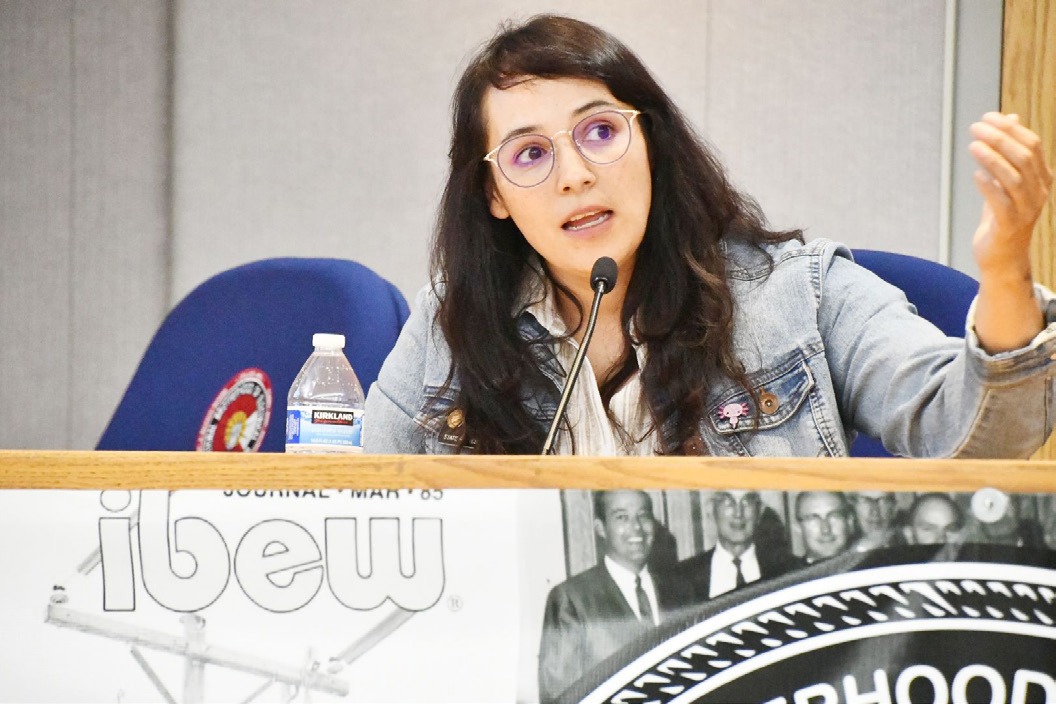
“Not only are we going to have to figure out how to backfill Medicaid, we’re going to have to figure out how to backfill SNAP, how to make sure kids in school get fed, how we support enforcement of environmental protections, transportation, housing,” all of which impact health, she said.
Add mental health care to that equation, said Katie Blickenderfer, chief clinical officer at Diversus Health, the largest behavioral health provider in El Paso County.
Diversus uses Medicaid dollars to offset the costs of providing care to people who can’t afford it, Blickenderfer said. About 55% of Diversus’ clients are on Medicaid.
Every Medicaid dollar that goes to behavioral health “saves $4 in criminal justice, homelessness, high-cost emergency visits,” she said, citing a study by the Colorado Health Institute.
The cuts proposed in the Big Beautiful Bill would “cause significant harm to the health and economic security of 1.1 million Coloradans that are enrolled in Medicaid,” and could lead to “closures of hospitals and clinics that are part of this already frayed social safety net,” retired infectious diseases Dr. Dinny Weber said.
But the Big Beautiful Bill is “not a done deal,” he noted, urging Coloradans “to talk to our representatives … before some of this becomes reality.”